Organizational News
Toronto Police Service Expands the Neighbourhood Community Officer Program to Four New Toronto Neighbourhoods and the TTC
Today, Chief Myron Demkiw announced the expansion of the Service’s successful Neigbourhood Community Officer (NCO) program into four new Toronto neighbourhoods, along with a dedicated NCO presence on the TTC’s Yonge Subway Line. Chief Demkiw was joined by Mayor Olivia Chow and TTC’s Chief Strategy and Customer Officer Josh Colle at 11 Division to make the announcement.
Currently present in 56 Toronto neighbourhoods, NCOs are experienced officers who are embedded in one neighbourhood for at least four years to actively co-develop solutions and mobilize police resources to reduce crime, fear of crime and anti-social behaviour. They work collaboratively with residents and community agencies to build sustainable solutions to these issues.
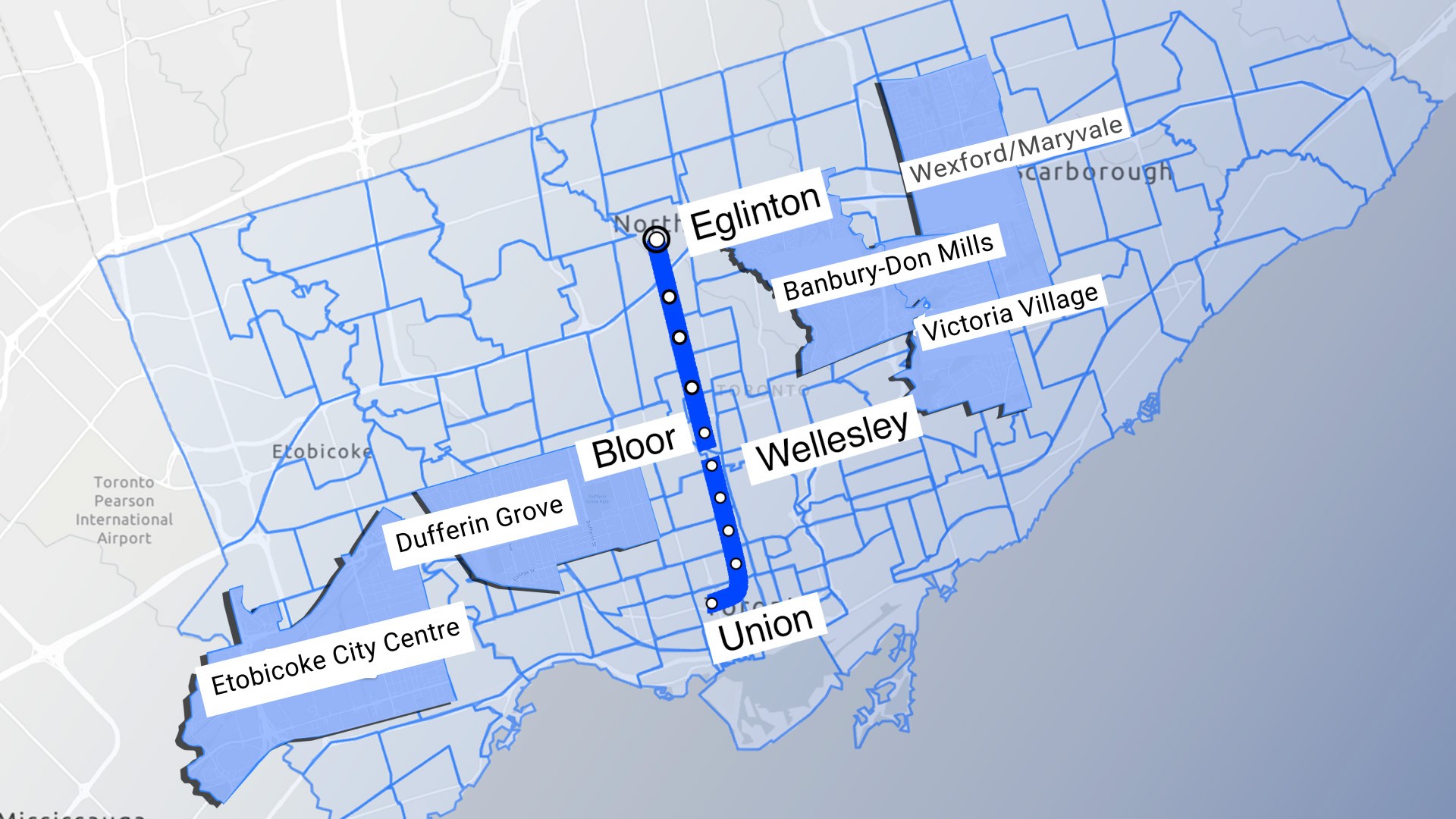
During the 2025 budget process, and as part of the multi-year hiring plan, the Service committed to 16 new NCOs in four new communities. These new communities are:
- Dufferin Grove (11 Division)
- Banbury-Don Mills/Victoria Village (33 Division)
- Wexford-Maryvale (41 Division)
- Etobicoke City Centre (22 Division)
The NCO program is also being expanded to include Toronto’s underground transit neighbourhood – the TTC subway system. There will be four dedicated officers between Union and Wellesley stations – and another four officers between Bloor and Eglinton stations. This will allow us to have a seven-day-a-week, dedicated coverage on the Yonge Line, ensuring transit riders feel safe and secure on their commute.
There will be prioritized patrols at Union and Bloor stations, particularly during peak hours. Officers will continue to work collaboratively with TTC Special Constables, Community Engagement Officers and other existing City and TTC resources to help vulnerable communities and those in crisis on the TTC.
These neighbourhoods were chosen based on occurrences of violent crime and crimes involving youth, community safety indicators, proximity to transit and schools, SafeTO recommendations and the Neighbourhood Prioritization Index, which uses family income, education, employment rates and family structure as part of the methodology.
A public survey on 2025 budget priorities revealed that 85 per cent of respondents value having an NCO in their community. Since the beginning of the NCO program, their presence in Toronto neighbourhoods has improved relationships and increased trust between police and residents.
NCOs work in partnership with residents and community-based organizations to address crime, disorder and community safety issues. The program was first introduced in 2013, and in 2023 was expanded to 56 Toronto neighbourhoods.
“Community policing means working hand in hand with the people we serve, solving problems together, and addressing issues before they become crises,” said Chief Myron Demkiw. “NCOs are visible and accessible to the public, walking through their neighbourhoods, meeting residents and engaging in collaborative problem solving to deliver sustainable neighbourhood-driven solutions, and this includes on the TTC. I’m happy we can work with our partners at the City and TTC to increase our presence and help to continue to improve community safety and wellbeing as part of an integrated approach with all our partners.”
We also know that the presence of police officers on the TTC is important to Toronto residents. The goal of adding dedicated officers to the TTC is to not only respond to criminal acts along the subway line, but to prevent criminal activity through enforcement, education, intervention and prevention.
“People deserve to feel safe in every corner of our city. NCOs bring a community-based approach to making that happen,” said Mayor Chow. “These officers build relationships and trust and help create safety solutions responsive to local needs. Our holistic approach to community safety is working, as we invest in more youth programs and emergency services, adding more NCOs in more neighbourhoods will make it even more successful.”
“I want to personally thank Chief Demkiw for this new and enhanced deployment on TTC subways in the downtown core,” said TTC CEO Mandeep S. Lali. “The Chief and I have had several productive conversations and are continuously engaged on this initiative and other ways to improve upon the safety and security of our customers and employees. This is one more way to achieve our shared goals.”
The expansion of the NCO program is part of the Service’s multi-year hiring plan and is also funded by the Government of Ontario’s Community Safety & Policing (CSP) Grant. This includes the salary costs for the officers, training, community engagement activities and equipment (bikes, radios, uniforms, etc.)
“Our government is proud to support the expansion of the Neighbourhood Community Officer program through the Community Safety and Policing Grant”, said Solicitor General Michael Kerzner. “This investment is helping strengthen community-based policing, deepen partnerships, and ensure officers have the tools they need to keep neighbourhoods and the TTC safe. Under the leadership of Premier Ford, we will always support our police services and initiatives like this that help protect Ontario and its communities.”
The Service recently highlighted NCOs at work in their communities. The full “Meet Your NCO” series can be found on YouTube.
For more information about our Neighbourhood Community Officer Program please visit the Neighbourhood Community Officer Program webpage.
_________
The Toronto Police Service is dedicated to delivering police services in partnership with our communities to keep Toronto the best and safest place to be. We are committed to being a world leader in policing through excellence, innovation, continuous learning, quality leadership, and management.