Organizational News
Toronto Police Service Board Approves 2026 Operational Budget
The Toronto Police Service’s (TPS) 2026 Operating Budget request, which will support continued investment in the Service’s frontline and investigative capacity, and another expansion of the Neighbourhood Community Officer (NCO) program, has been approved by the Toronto Police Service Board (TPSB).
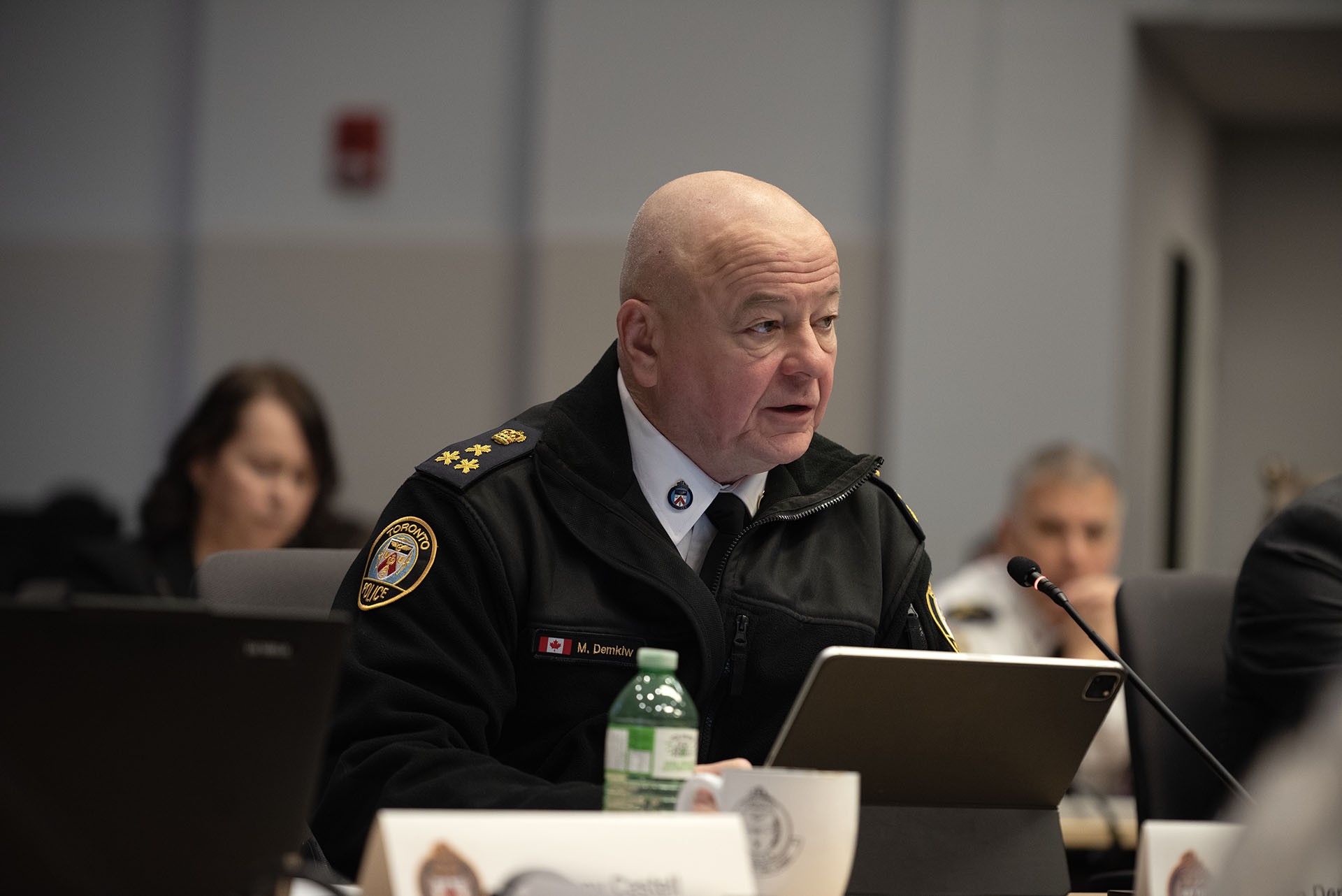
“This budget strengthens the progress we’ve made over the past year,” said Toronto Police Chief Myron Demkiw. “It continues to support our multi-year hiring plan, ensuring more officers are on the frontline to continue to improve responding to residents when they need us the most. We’re also pleased to expand our Neighbourhood Community Officer (NCO) program and increase our presence within the transit system.”
The $1.43 billion budget includes a $93.8 million increase (7 per cent), which will go to the City of Toronto’s Budget Committee for their consideration, and will be voted on by City Council early next year.
Investing in our progress
This year’s budget request centres around the continuation of a multi-year hiring plan approved by the Board last year, enabling the hiring of 360 officers in both 2025 and 2026 (includes backfills for separations). This plan is vital to addressing population growth, rising service demands, increasing retirements and augmenting supervision for a younger frontline workforce.
Key elements include:
Staffing:
- Four classes of 90 officers to be hired in 2026, resulting in a net gain of 143 officers after retirements and separations.
- Expansion of the Neighbourhood Community Officer program.
- 40 net new civilian professionals on or supporting the front line
Improving service delivery
The Service is committed to modernization, leveraging technology and data analysis to improve service delivery.
We’ve been able to reduce response times by over five minutes for priority one calls – which are calls involving violence or danger to life. Targeted long-term investments like the multi-year hiring plan will help us to continually improve.
This year we added four new communities to the Neighbourhood Community Officer program and expanded the program for the first time to the TTC to prevent criminal activity on the subway and stations through enforcement, education, intervention and prevention.
Technology like the Automated Licence Plate Recognition (ALPR) system is making a difference – not only does it help in the recovery of stolen vehicles, but it has helped us to reunite 30 missing people with their families.
We’re getting guns, drugs, and violent criminals off Toronto streets – and solving crimes that have traumatically impacted residents, bringing closure to families and victims of crime.
So far this year, we’ve removed over 528 crime guns from Toronto streets.
Targeted investigations like Project Castillo, Project Night Hawk and Project Poppie are getting dangerous drugs, guns and violent criminals off Toronto streets.
The Service has also made over three per cent more arrests in 2025, and traffic tickets and warnings have increased by 10 per cent over last year. Despite a greater number of interactions and greater level of violent occurrences, the Service’s use of force rates have again decreased.
Complexities of policing in Toronto
Toronto’s unique status as a world-class city and its location along the Highway 401 corridor present ongoing challenges, including organized crime, human trafficking, and the movement of illegal goods. Additionally, since October 7, 2023, we’ve responded to over 3,500 protests and events tied to global geopolitical issues – over 1,600 this year alone.
Toronto has experienced a 21 per cent growth in population since 2010, during a time when the Service’s staffing was decreasing. We are now in recovery mode, as demand for service increases, coupled with the rising complexity of policing (e.g. emergency calls, complex investigations, increased time spent on calls, demonstrations/protests etc.).
Toronto traffic and reducing gridlock is a key City priority that we partner on. To support road safety, the Service remains focused on education and enforcement as a form of deterrence. We are working every day to manage traffic congestion, focusing on Vision Zero and investigation management.
So far in 2025, we have issued over 335,000 tickets and warnings – up 10 per cent, and we have issued approximately 1.45 million parking tags and had 15,800 vehicles towed to keep the city moving.
The complexities of policing in Toronto requires the Service to pivot – most times very quickly to respond to current events.
Looking ahead
While progress has been made in the last few years to reform and improve service delivery levels, there is more to do. The Service faces the pressing challenge of maintaining service levels that aligns with the city’s growth and rising demands.
“This budget reflects our shared commitment to continue building a safer, stronger city,” said Chief Demkiw. “Together, with the Toronto Police Service Board and the City of Toronto, we continue to co-develop, co-design and co-deliver solutions to promote safety and wellbeing with the communities we serve.”
A backgrounder on the 2026 budget and all budget materials can be found on the budget section of the TPS website.