Celebrating Black History Month
The Toronto Police Service’s commitment to equity, fairness and transparency is not tied to one month but guides the Toronto Police Service every day, Chief Myron Demkiw told community and police members gathered as the Service marked its 32nd annual Black History Month celebration at police headquarters on January 29
“For as long as I am Chief, one of my top priorities will always be to improve trust,” he said. “Each and every one of you plays a vital role in building trust and strengthening relationships between police and the communities we serve.”
Black History Month, he noted, is both a time to celebrate the cultures, histories and countless contributions of Black communities in Toronto and across Canada, and a reminder that public safety in a city as diverse as Toronto is built through trust and meaningful relationships.
Demkiw pointed to the work of the Service’s Community Partnerships & Engagement Unit, the expanded Neighbourhood Community Officer Program and initiatives focused on empowering and supporting young people, crediting officers and leaders such as Superintendent Anthony Paoletta and Constable Curtis Celestine for strengthening connections with communities.
This year’s Toronto Police Service Black History Month theme is ‘Black Resilience’, a reflection, Demkiw said, of the perseverance shown by those who broke barriers within the Service.
The first Black officers, the late Larry McLarty and Gloria Bartley, joined the Service in 1960, paving the way for future generations.
Among them was retired Sergeant Terry James who entered the Service in 1980 as one of 10 women in her recruit class, the largest female intake at the time.
She played a key role in launching the Black History Month celebration at police headquarters in 1994 and was promoted to Sergeant in 2001. She was elevated alongside Sonia Thomas and Janine Crowley, who are now retired, and Karen Hunte, marking the first time Black women were promoted to the rank of Sergeant together.
James retired in September 2010 after 30 years of service.
In recognition of her contributions to making the Service more inclusive, the Trailblazer Award was established in her honour in 2024. This year, the award was presented posthumously to Bartley, who died in 2018 at age 84.
She migrated from Trinidad and Tobago in the late 1950s and served for seven years with TPS before leaving in 1967 to raise her family. At the time, female officers were required to resign if they became pregnant, a policy that remained in place until 1972.
“That detail matters because it reminds us that trailblazers like Gloria Bartley navigated challenges that many of us today will never fully understand,” added Demkiw. “…We must also recognize and reflect upon the people who lived the reality of being the first, the only, and the ones who carried the weight of opening doors for others.”
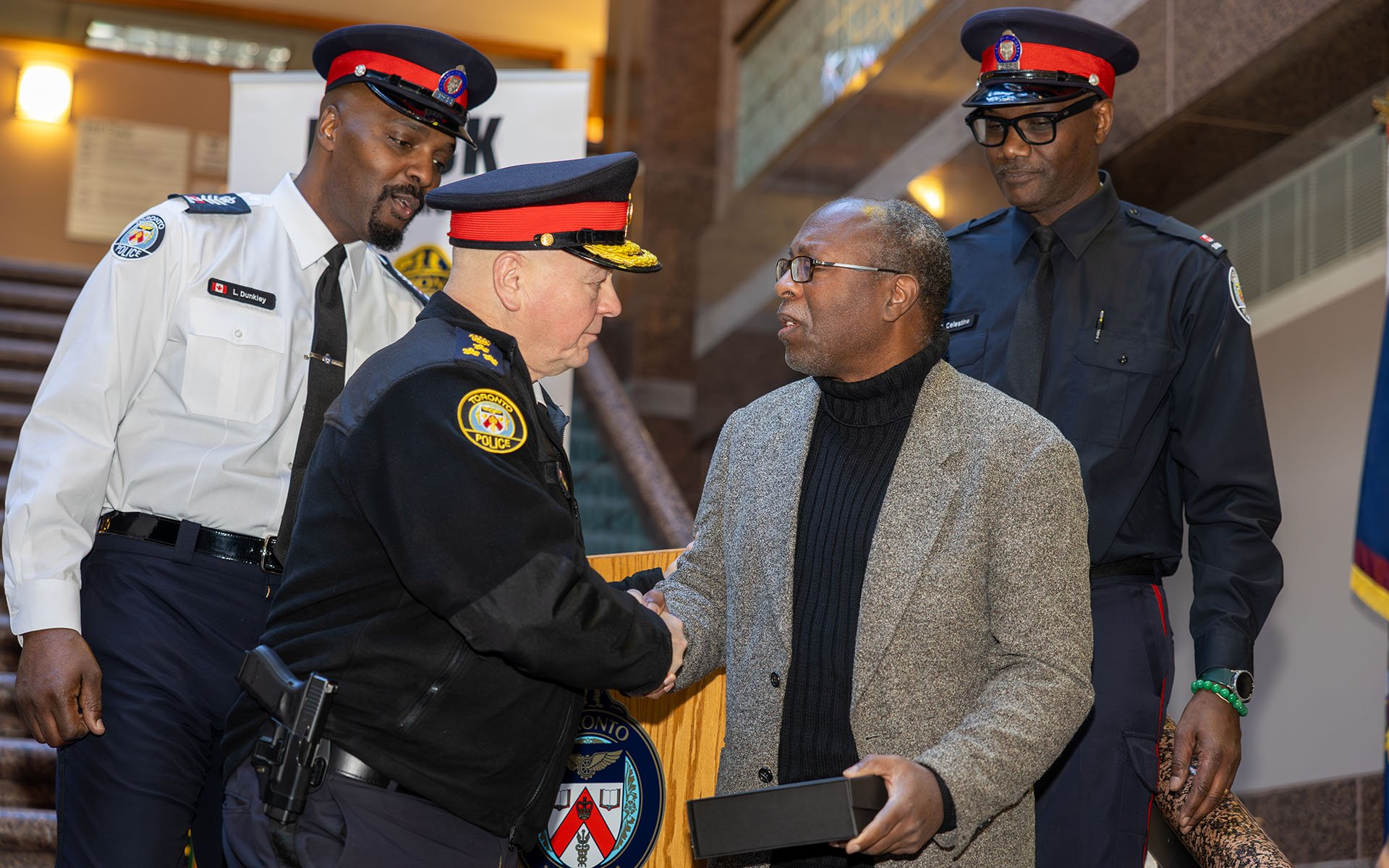
Bartley later married Ralph Bartley, and together they had a son, Alonzo Bartley, who accepted the Trailblazer Award on her behalf.
Bartley emphasized that his mother was more than a trailblazer. Her forced departure under policies that barred married women from serving until 1972, he noted, ultimately became a catalyst for change.
Speaking on behalf of the Toronto Police Service Board, Deputy Mayor Amber Morley said Bartley’s story reflects the kind of change that continues to shape policing today.
“It is progress driven by individuals who challenge limits, endure resistance and expand opportunity for those who follow,” she noted. “Her presence in the Service redefined who could belong, who could lead and whose experiences mattered. The principles she embodied remain central to how police work to earn trust, strengthen communities, and build a more representative profession.”
Morley noted that over the past several years, the Board has placed a stronger emphasis on deepening its connection with the public by developing more meaningful ways to listen, learn and ensure community voices help shape policies and decisions.
“We continue to rethink and evolve what policing looks like in our neighbourhoods,” she added. “This includes supporting new approaches to community safety, advancing efforts to confront systemic racism and taking concrete steps to strengthen trust, particularly with communities that have been historically underserved or harmed.”
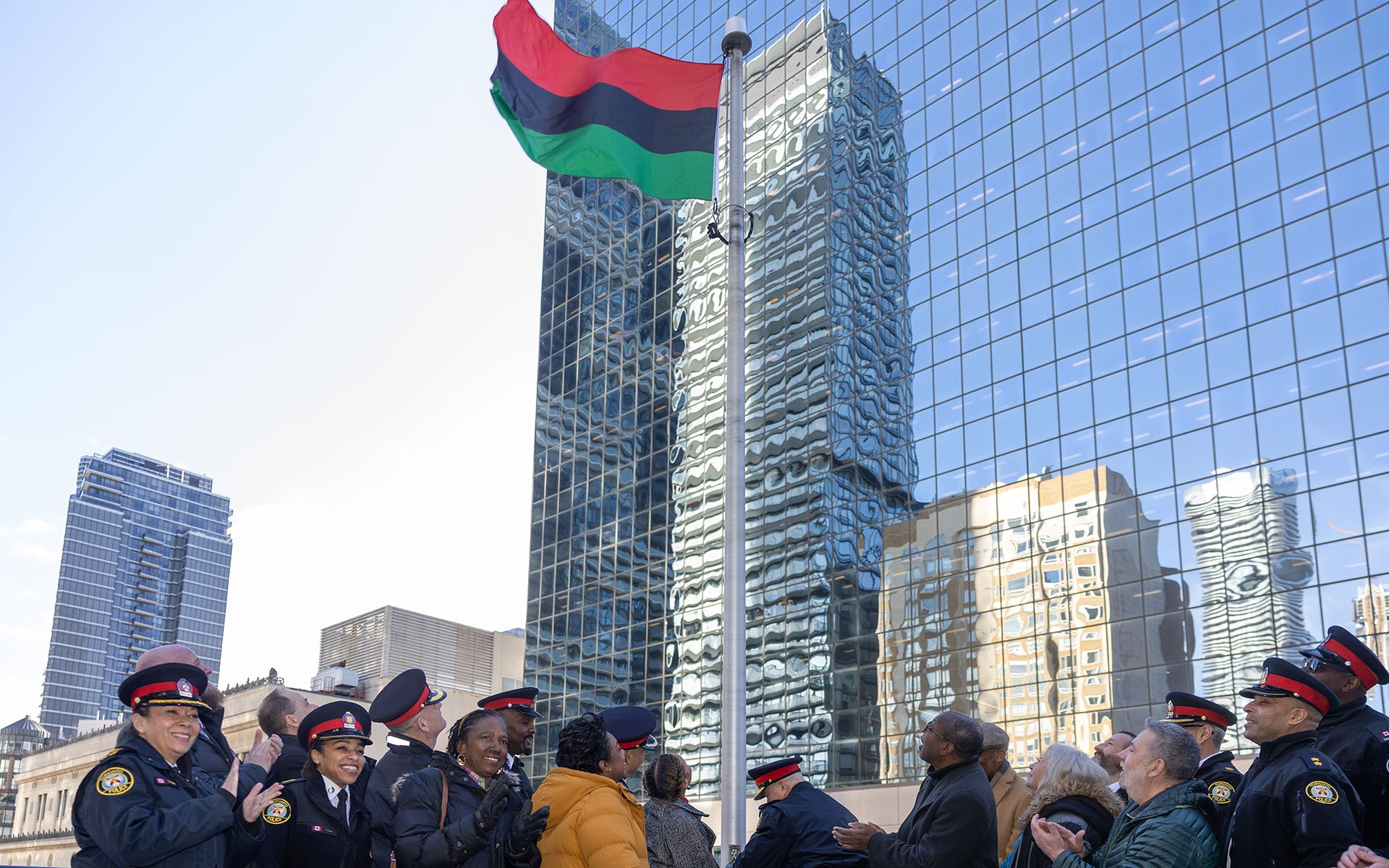
As part of the commemoration, the Pan-African flag was raised at police headquarters on January 29 and will fly throughout Black History Month.