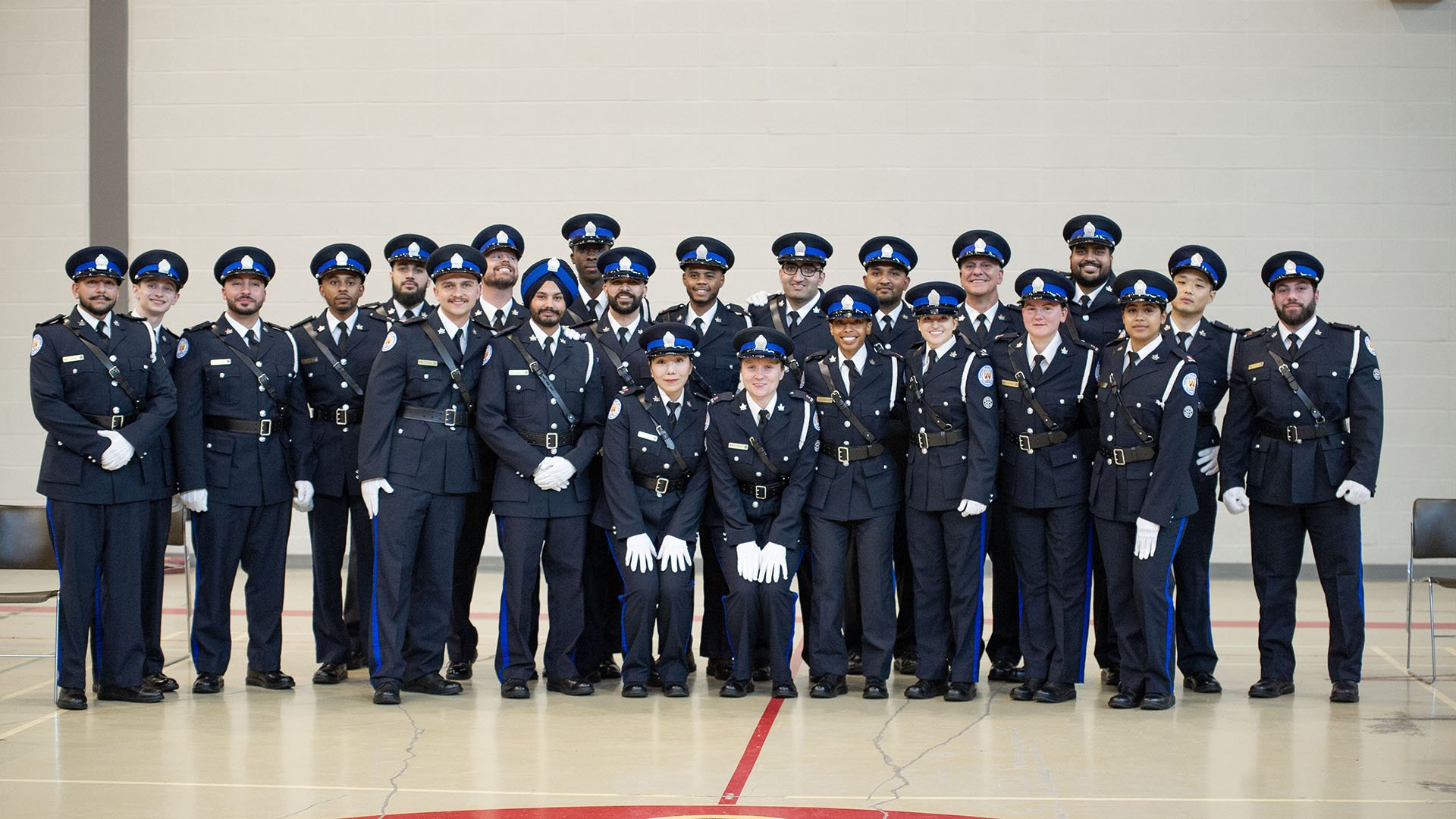
New Parking Officers Ambassadors for Service
New Parking Enforcement Officers celebrated their new career keeping the city moving safely.
“Getting to this point is not easy,” Deputy Chief Lauren Pogue said at the graduation ceremony for the 24 new officers. “It takes ability, resilience and a lot of commitment. The training you all received has prepared you with the skills and knowledge you need to succeed in your career with the Toronto Police Service. As Parking Enforcement Officers, you will become familiar with the streets of Toronto and the city’s 158 neighbourhoods. During every shift, you will make judgment calls, drawing on your training and your knowledge of municipal by-laws, to keep the city’s roads moving and people safe.”
By enforcing traffic, parking and accessibility regulations, they help reduce congestion, improve emergency vehicle access and maintain order on busy streets.
Pogue also stressed that true progress cannot be measured solely by achievement or success, but by the importance of protecting one’s health and overall well-being throughout the journey.
“We are committed to ensuring that you have what you need to succeed,” she added. “Your well-being also matters to Torontonians who rely on you in so many ways. As you know, this job is physically demanding. You’ll be walking a lot, driving in all conditions and, for some of you, patrolling by bike. At times, you’ll also encounter stressful situations. This is why I want to remind you to continuously make self-care a priority. As an organization, we will offer every support we can to assist you. Your health, safety and well-being are essential for us to serve our communities effectively.”
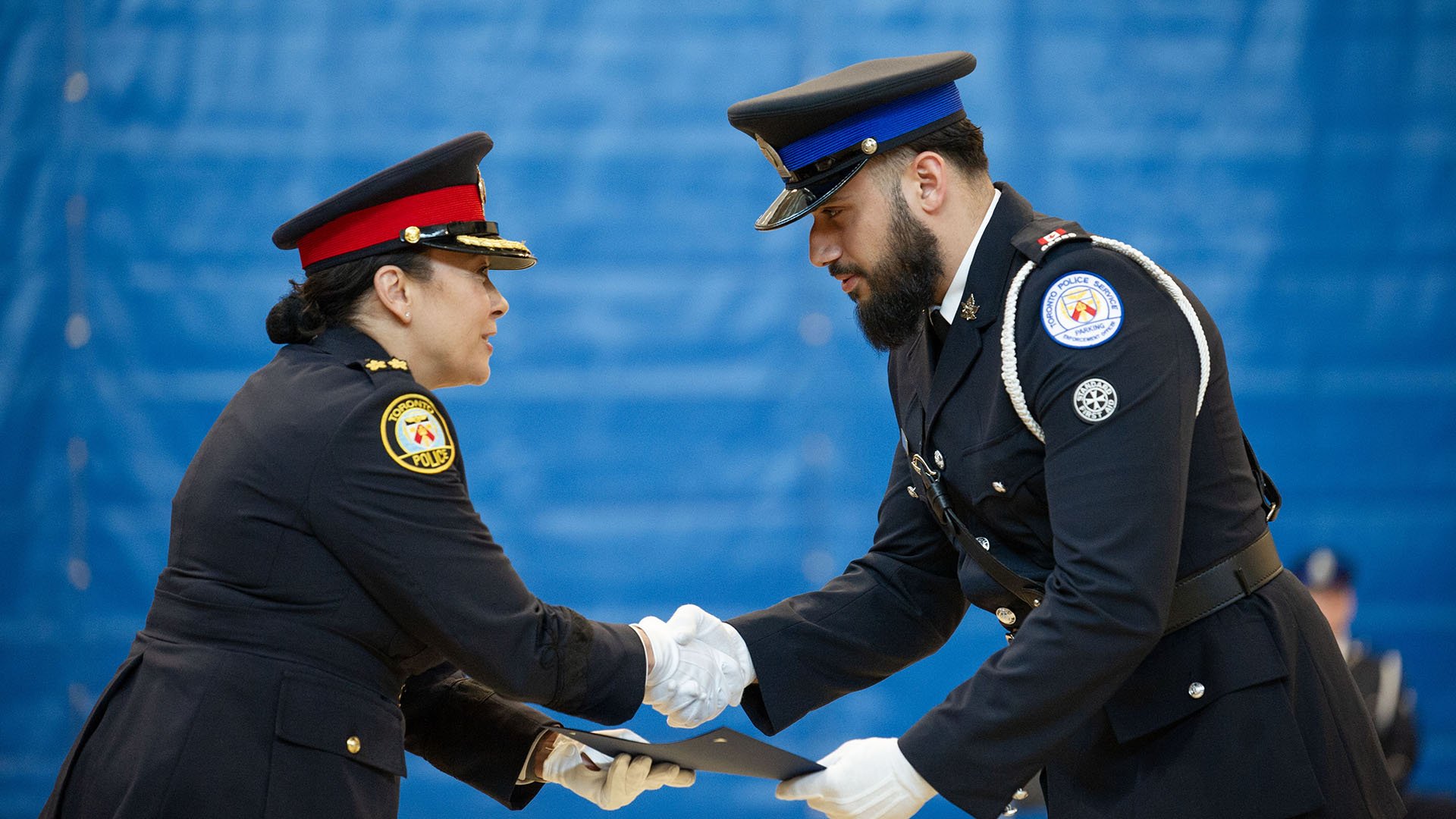
The role of Parking Enforcement Officers is expected to become even more important as Toronto prepares to host matches during the 2026 FIFA World Cup, when the city is expected to welcome thousands of visitors from around the world. Effective parking enforcement will help manage increased traffic, support public safety and ensure residents and tourists can navigate the city smoothly during one of the world’s largest sporting events.
“Toronto is a city in constant motion,” Toronto Police Service Board Chair Shelley Carroll said. “It is growing, evolving and becoming more complex by the day. In that environment, the work you do is essential. You help ensure that our streets function safely, efficiently and fairly for everyone who relies on them. We see the impact of your work every day, but perhaps never more clearly than in the winter months when snow and harsh conditions test the limits of our infrastructure and our patience. In those moments, your role becomes absolutely critical. You are helping to keep routes clear, maintain access and ensure that people can move through this city safely.”
Carroll told graduates that just as important as what they do is how they do it.
“This role is not only about enforcement,” she pointed out. “It is about connection. It is about the daily interactions you have with residents, small business owners, delivery drivers, commuters and families. You are present in neighbourhoods across the city and often you are the first, and sometimes the only, point of contact someone has with the Toronto Police Service. That carries real responsibility.
“And it also carries a real opportunity. You have the opportunity to reflect the values we are working to strengthen in this city — fairness, respect and equity. You are ambassadors not just of a Service, but of a vision for Toronto, one where people feel seen, respected and treated with dignity. This class reflects that vision in a powerful way.”
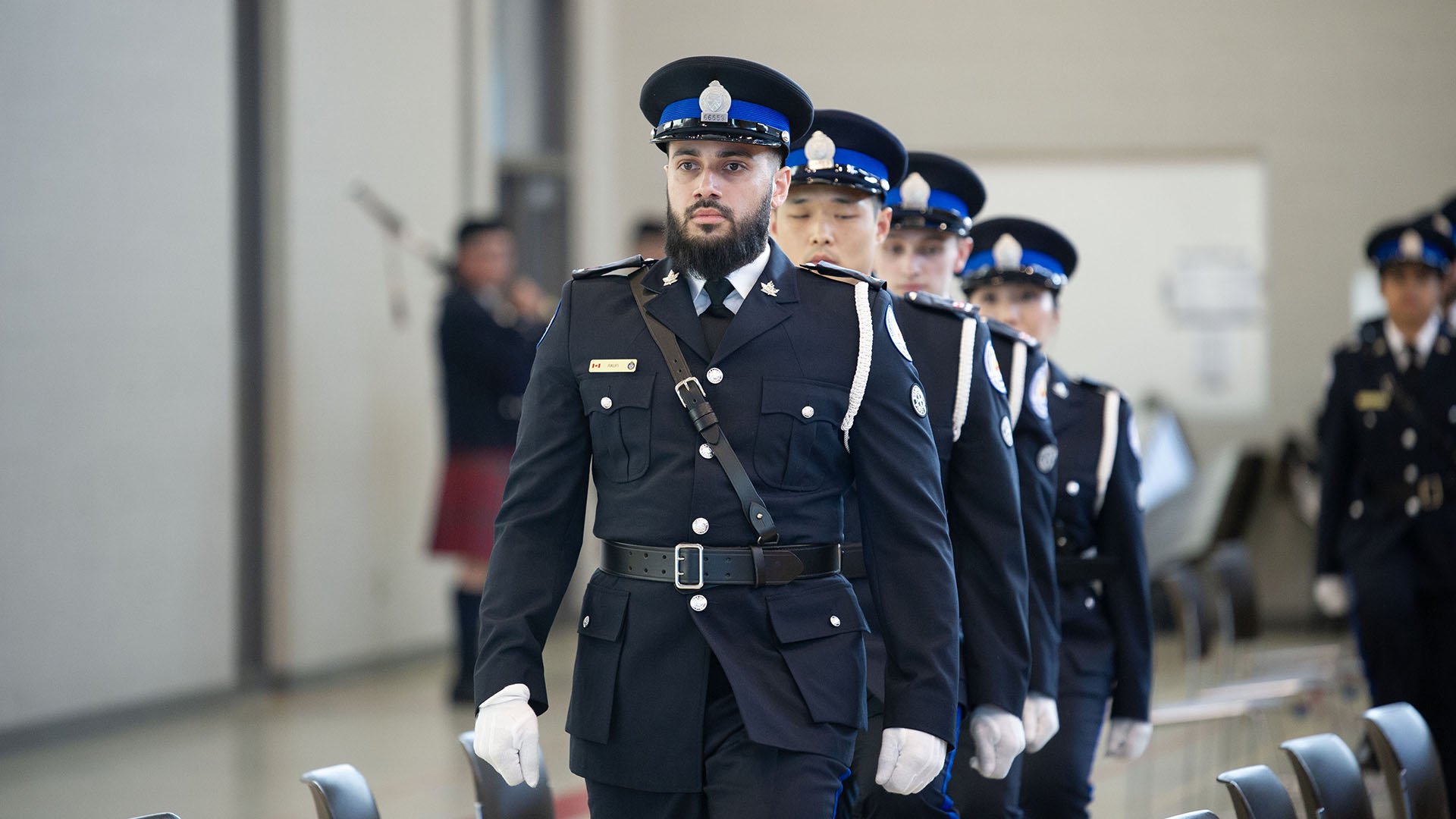
Besides managing traffic flow, Parking Enforcement Officers respond to hundreds of thousands of service calls, help recover stolen vehicles and work daily to protect vulnerable road users. They also assist in emergencies, provide language interpretation and support grassroots crime prevention initiatives.
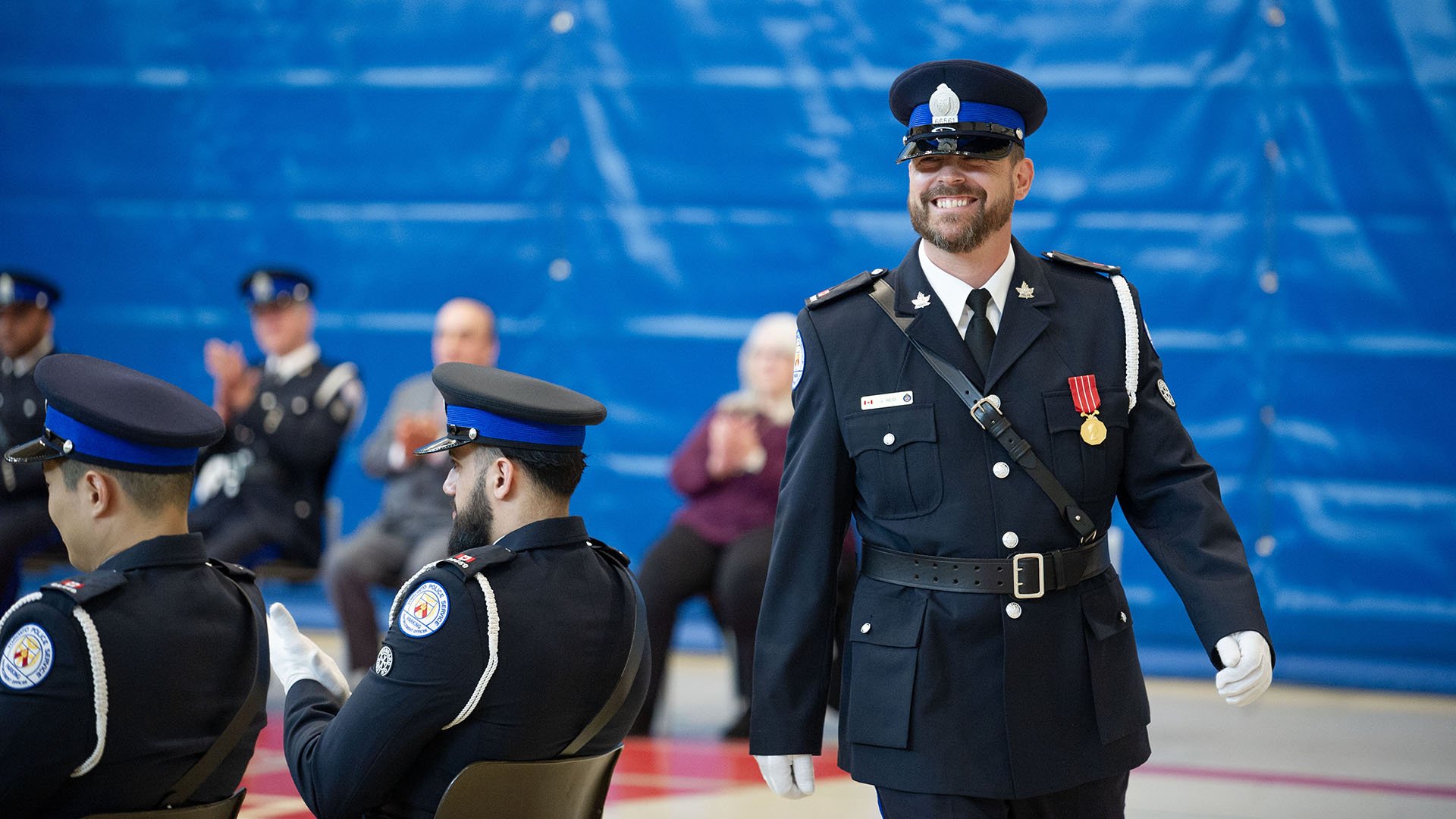
For class valedictorian Jason Reid, the career path represented an opportunity to serve the community differently after spending more than 20 years in sales.
“I wanted to do something different outside the corporate world,” he said. “With 20 years of service in the Canadian Armed Forces Reserves, I thought this would be a good way to step back in and serve the community.”
While some graduates view the position as a stepping stone toward becoming a uniformed officer, Reid said that is not his goal.
“I was looking for something that would allow me to work with Toronto Police while being out on the streets,” he noted. “It allows me to meet members of the community and enjoy the outdoors, which I like.”
Jihye Kim achieved the highest academic mark in the class with a score of 98.7 percent. She previously worked as a Communications Operator for 11 months before transitioning into her new role.
“In my previous position, I dealt with parking-related calls,” said Kim, who was a middle school teacher for seven years before joining Toronto Police. “Now, I will be out on the road enforcing parking rules.”
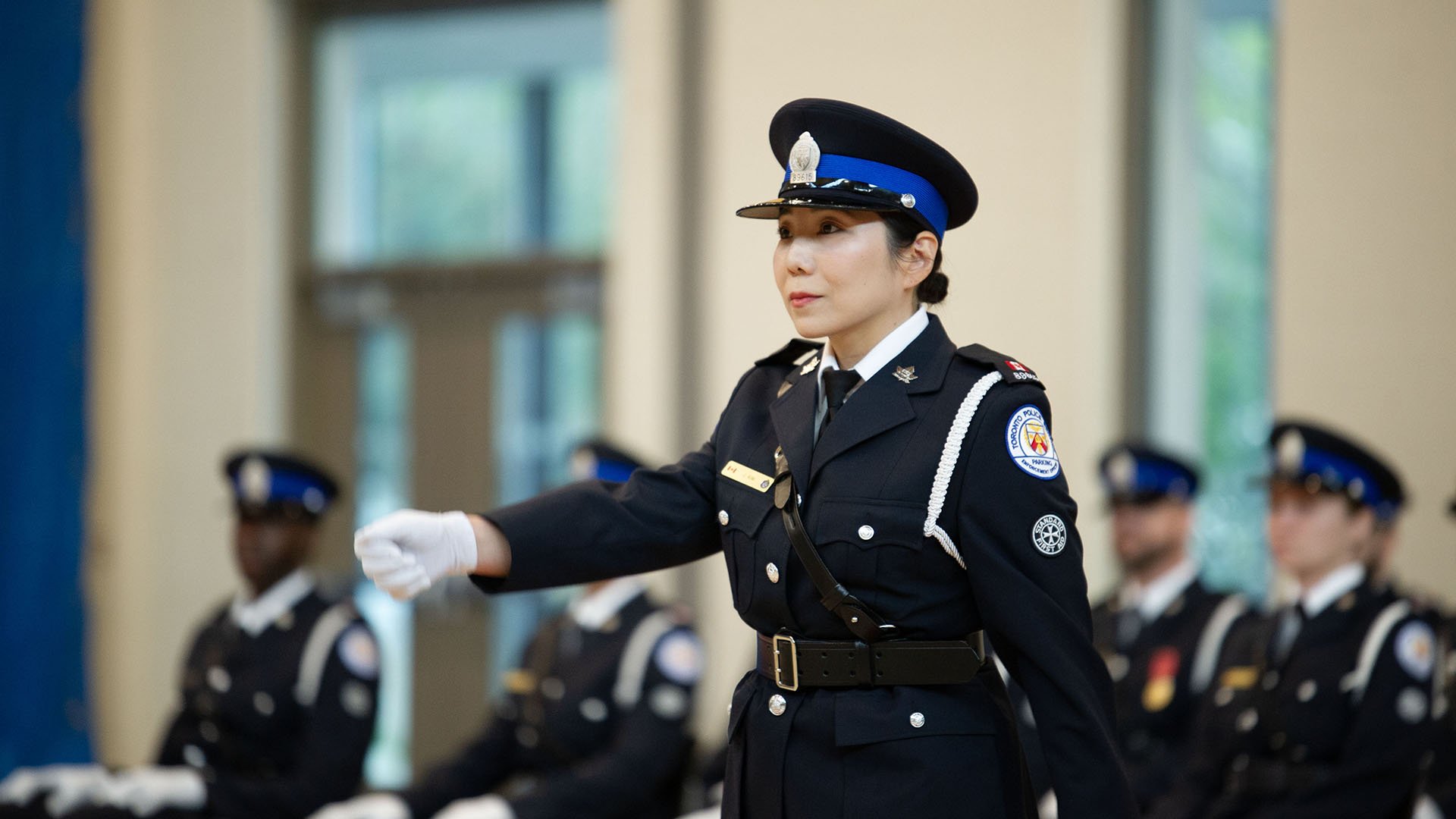
The class trained for six weeks, beginning on April 13. Recruits received instruction in handwritten and electronic ticketing, towing, private property enforcement, fire routes, accessible parking considerations and municipal by-laws.
They also completed training in crisis communications, defensive tactics, tactical communication, powers of arrest, occupational health and safety, and ethics at the police college. Each new Parking Enforcement Officer is partnered with a Coach Officer for five weeks to help mentor them and strengthen their skills as they transition into their duties.