

Mounted Unit Celebrates Historic 140th Anniversary
For 140 years, the Toronto Police Service Mounted Unit has stood as a living symbol of tradition, service and connection in Canada’s largest city.
From its earliest days patrolling muddy streets and open farmland to its modern presence at parades, protests, festivals and ceremonial events, the specialized unit has evolved alongside Toronto itself.
More than a striking visual emblem of policing on horseback, the Mounted Unit represents continuity, discipline and public trust, an enduring partnership between officer and horse that has helped bridge communities, maintain order and anchor moments of both celebration and challenge across generations.
Retired Superintendent Bill Wardle played a pivotal role in preserving and sharing the unit’s history, helping ensure its legacy is both understood and respected.
Through firsthand knowledge and storytelling, he has brought the past to life, explaining how mounted policing evolved, the traditions behind ceremonial duties and the essential role horses have played in public order and community relations.
“When I joined the Service in 1977, I didn’t know much about the Mounted Unit,” Wardle recalled. “After a couple of officers at my division transferred there, they told me how much they enjoyed it. I was young and thought I could go for a few years, then return to mainstream policing.”
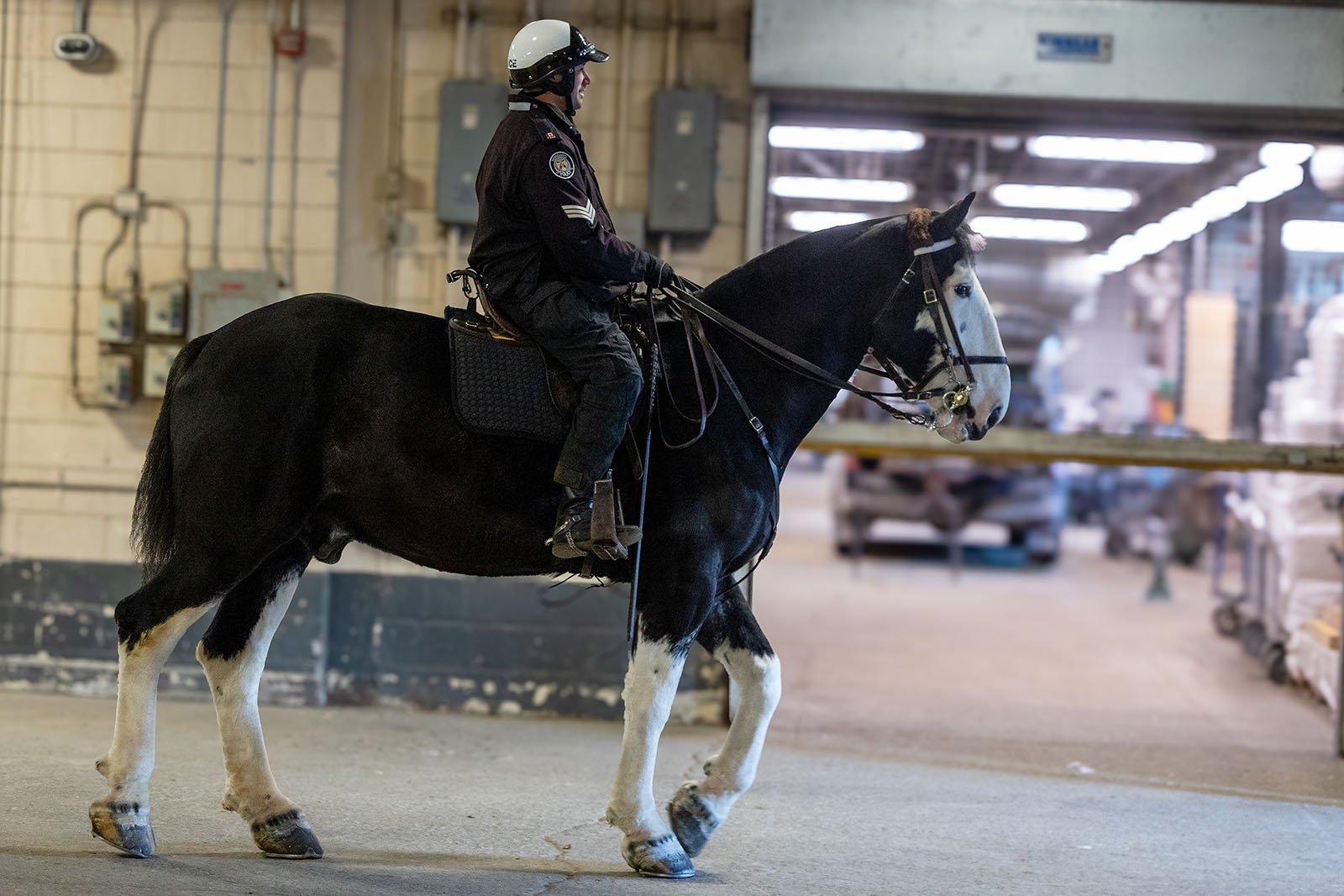
Wardle transferred to the Mounted Unit in 1981 and remained closely connected to it for 32 years.
“During my career, I was promoted and moved to other assignments, but I always returned to the Mounted Unit,” he said.
Over the years, Wardle met the late Queen Elizabeth II while serving on royal escorts, participated in the unit’s Musical Ride for three years and attended the inauguration of U.S. President Barack Obama in 2013.
During that event, then Staff Inspector Bill Wardle and retired Sergeant Jim Patterson rode Tecumseh and Honest Ed in the parade along Pennsylvania Avenue as guests of an American police unit.
Wardle also singled out the 2010 G20 Summit in Toronto as a career highlight.
“The Mounted Unit trained extremely hard for that event, and we worked closely with officers from other units whom we helped train,” he said. “All of that preparation paid off. The officers were professional and accomplished in every task they set out to do.”
It is highly unusual for Toronto police officers to join a specialized unit such as Mounted at the start of their careers, as most are required to gain several years of general policing experience first.
Albert ‘Jim’ Davis, who passed away in May 2025 at age 93, was a notable exception.
He served with the Governor General’s Horse Guards from 1950 to 1984, rising through the ranks from senior non-commissioned officer to regimental sergeant major, and later becoming captain and regimental transport officer.
“Back then, when Toronto Police officers rode at the Queen’s Plate, they wore the uniforms of the Governor General’s Horse Guards,” Wardle explained. “Jim was the lead rider for the military, and Sergeant Edwin Johnson was the lead rider for Toronto Police. Recognizing Jim as an accomplished rider, Johnson took him to the Employment Office, and Inspector John Watt requested that he be hired. The very next day, Jim started with the unit and never worked at a regular police division, except for a three-month lateral assignment in Traffic.”
Best known for his legendary horse Barney, Davis retired from the Mounted Unit in 1993.
Training remains central to the unit’s effectiveness.
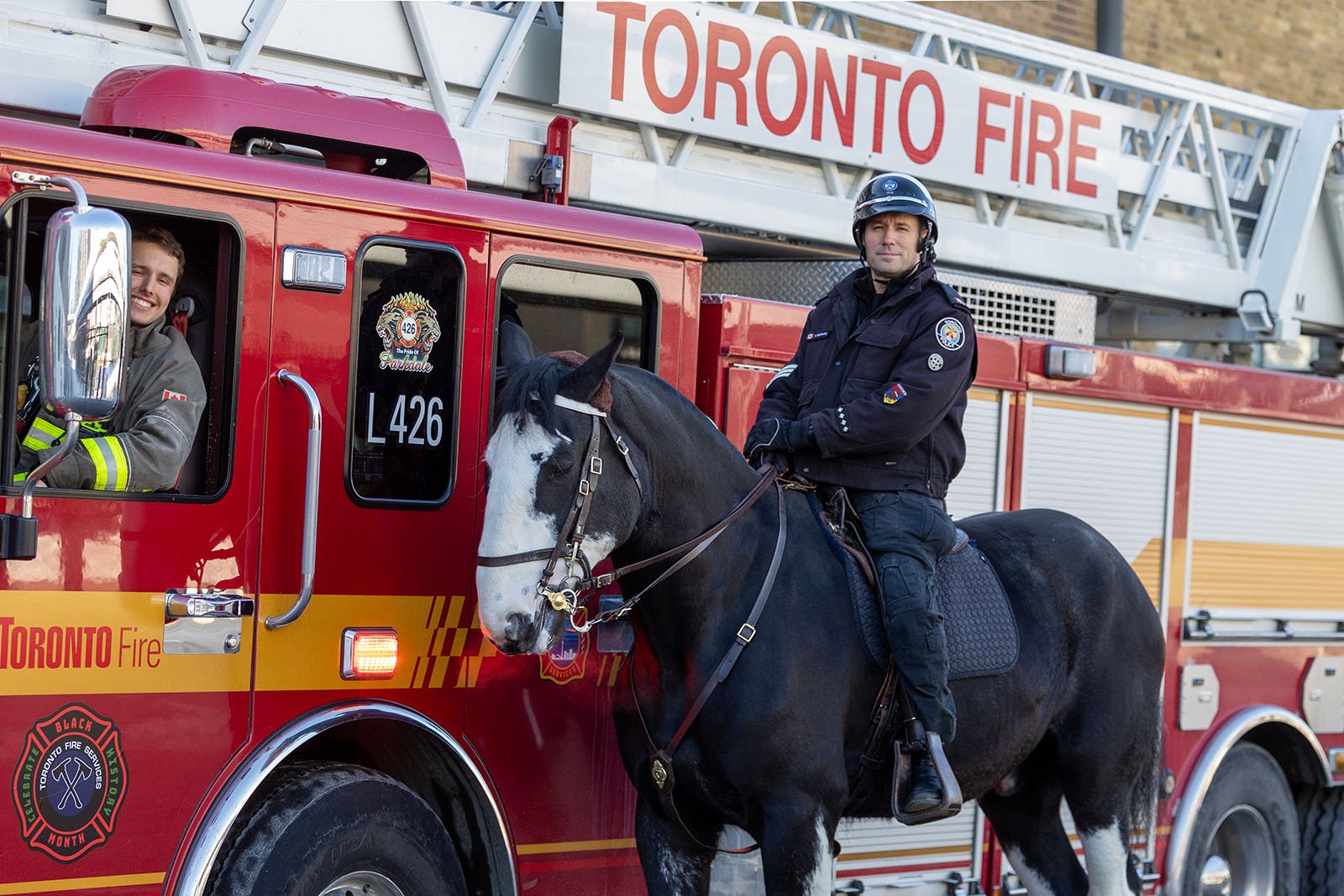
Trainers play a critical role in preparing police horses to remain calm, disciplined, and responsive which are qualities essential to both public safety and the animals’ well-being.
In a fast-paced city like Toronto, horses must safely navigate crowded streets, noisy events and unpredictable situations. Well-trained horses allow officers to manage large crowds and respond calmly during emergencies, while minimizing stress and risk.
Sergeant Kristopher McCarthy, a 26-year veteran of the Mounted Unit and its lead trainer since 2014, has been instrumental in maintaining those standards.
“We look for horses that are calm, kind-natured and able to be ridden by multiple riders,” he said. “For riders, it’s important to stay relaxed and move with the horse. The bond between horse and rider is built on deep trust, forged through rigorous training and daily partnership. That bond is essential to safety, control and effectiveness in every situation.”
Recognized as a national leader, the Mounted Unit regularly shares its expertise with police services across the country. In his 30th year with the Service, McCarthy has trained every police mounted unit in Canada.
In April 2025, the unit helped Ottawa officers return to mounted policing, with five officers completing the 15-week Basic Equitation course. The Ottawa Police Service last had a Mounted Unit in 1993.
Toronto’s horses have also competed in North American Police Equestrian Championships and similar events, showcasing the unit’s high level of training.
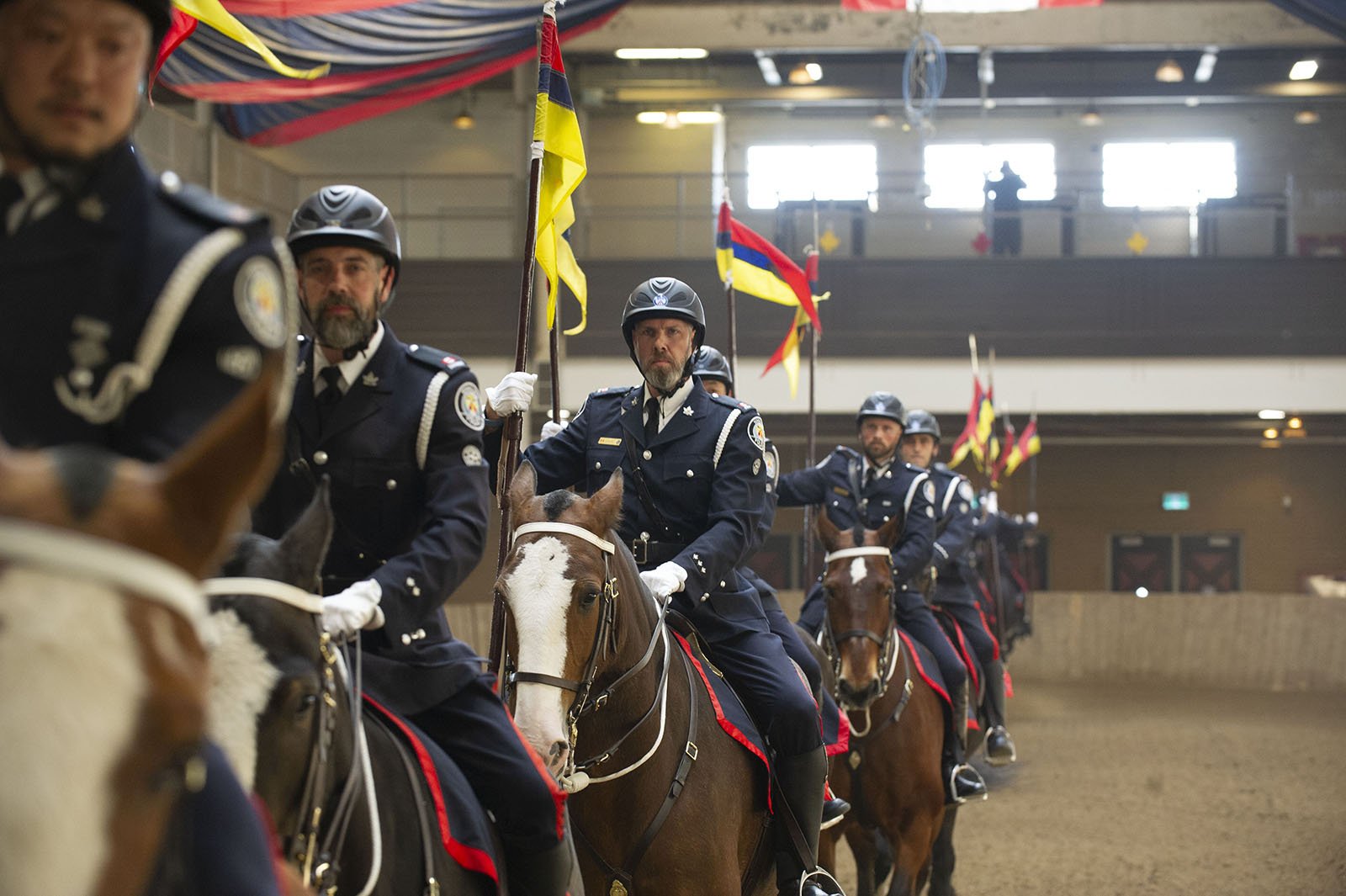
McCarthy attributes that success to Toronto’s demanding downtown environment, where constant exposure to traffic, crowds and noise sharpens the horses’ focus and resilience.
Since the assignment of its first female officer, Constable Kathryn Farrell, in 1986, the unit has continued to grow in gender diversity, helping pave the way for more women to serve in highly specialized and visible policing roles.
Constable Beverly Dobbs is now in her 11th year with the unit.
“Unlike most of my colleagues, I grew up riding horses, and it has always been my passion,” she said. “I applied after six years on the job, not expecting the opportunity would come so early. When it did, I was incredibly grateful.”
One of Dobbs’ most memorable moments occurred in November 2024, when she and two other officers apprehended a fleeing suspect after his vehicle crashed into a storefront.
“We communicated effortlessly, trusting every move each other made, not only as police officers, but as experienced horseback riders, in a very high-stress situation,” she said.
Beyond policing and competing, the unit has also contributed to Canada’s military history.
During the First World War, the Mounted Unit donated several horses to the Canadian military where they were used to transport supplies and pull artillery overseas. Horses played a critical role in the war, as armies depended heavily on them for mobility and logistics.
“Towards the end of the war, our horses proved invaluable in the breakout offensives where mobility and speed were key,” said TPS historian Matt Scarlino. “It was an astonishing series of Canadian victories known as ‘Canada’s 100 Days.’ It should never be forgotten that horses were absolutely essential to that success.”
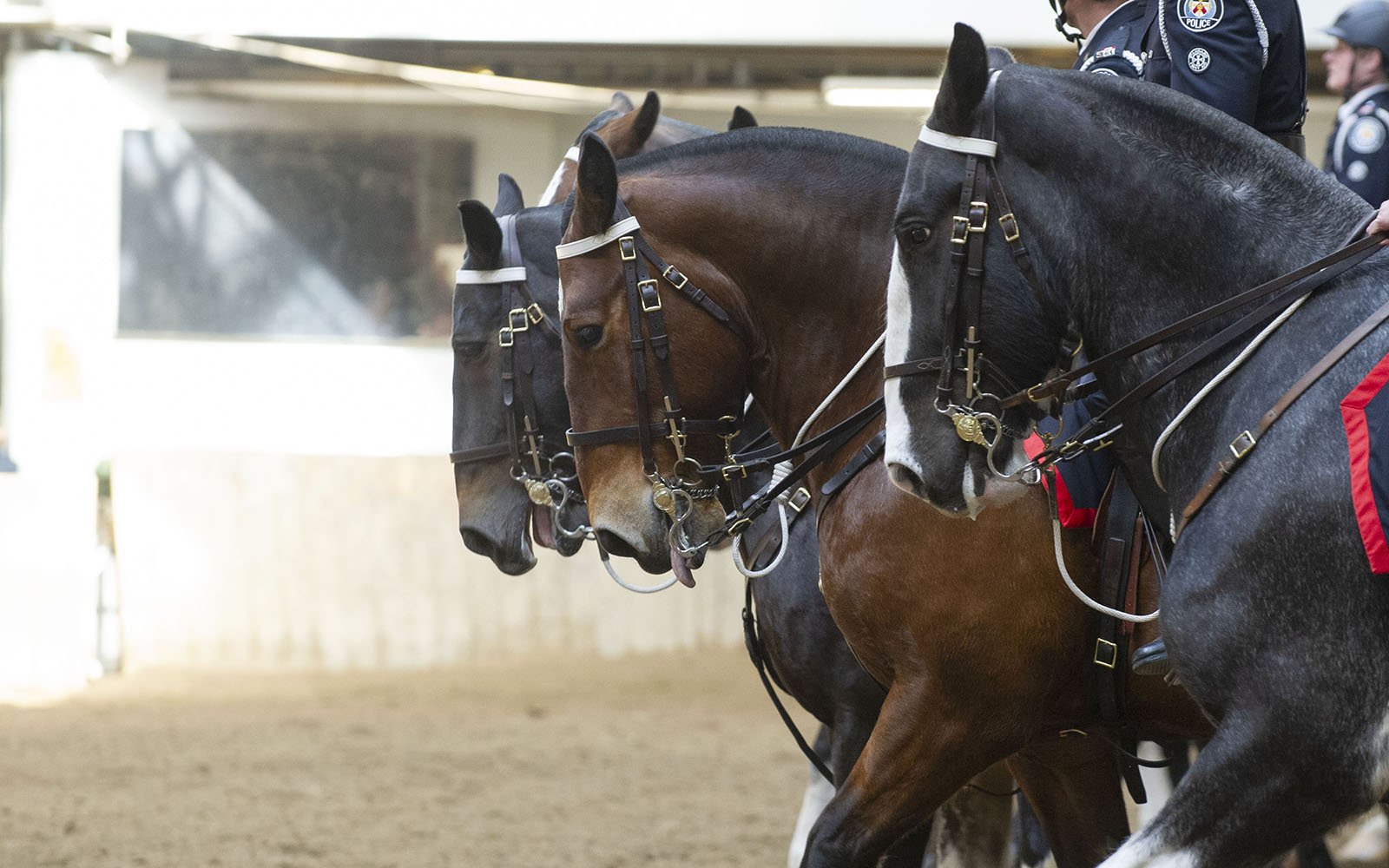
The Mounted Unit currently has 24 horses, with Chief Blair—acquired in 2015—being the oldest. Horses are typically purchased between the ages of three and five and are retired around age 15, ensuring they are physically and temperamentally suited for the demands of urban policing.
“As we celebrate 140 years of the Toronto Police Service Mounted Unit, we reflect on the vital role our equine partners play in our daily operations,” said Inspector Steven Kerr of the Emergency Management & Public Order Unit.
“From large-scale crowd management to navigating the corners of the downtown core, the versatility of this unit is unmatched across the country. This anniversary isn’t just about looking back at our history. It’s about celebrating the specialized training and dedication that keep our unit at the forefront of urban policing today.”
“The Mounted Unit’s legacy is built on generations of dedicated members, service animals, and unwavering standards,” said Chief Myron Demkiw. “There used to be a time when there was a barn in every station. As the Mounted Unit has evolved over the years, we rely on them today for their operational capacity, where experience and presence matter. TPS’s Mounted Unit is an iconic part of Toronto’s history and a proud symbol of professionalism and our shared commitment to service.”
After 14 decades, the Mounted Unit remains a powerful reminder that in a rapidly changing city, trust, partnership and tradition, sometimes carried on four hooves, still matter.