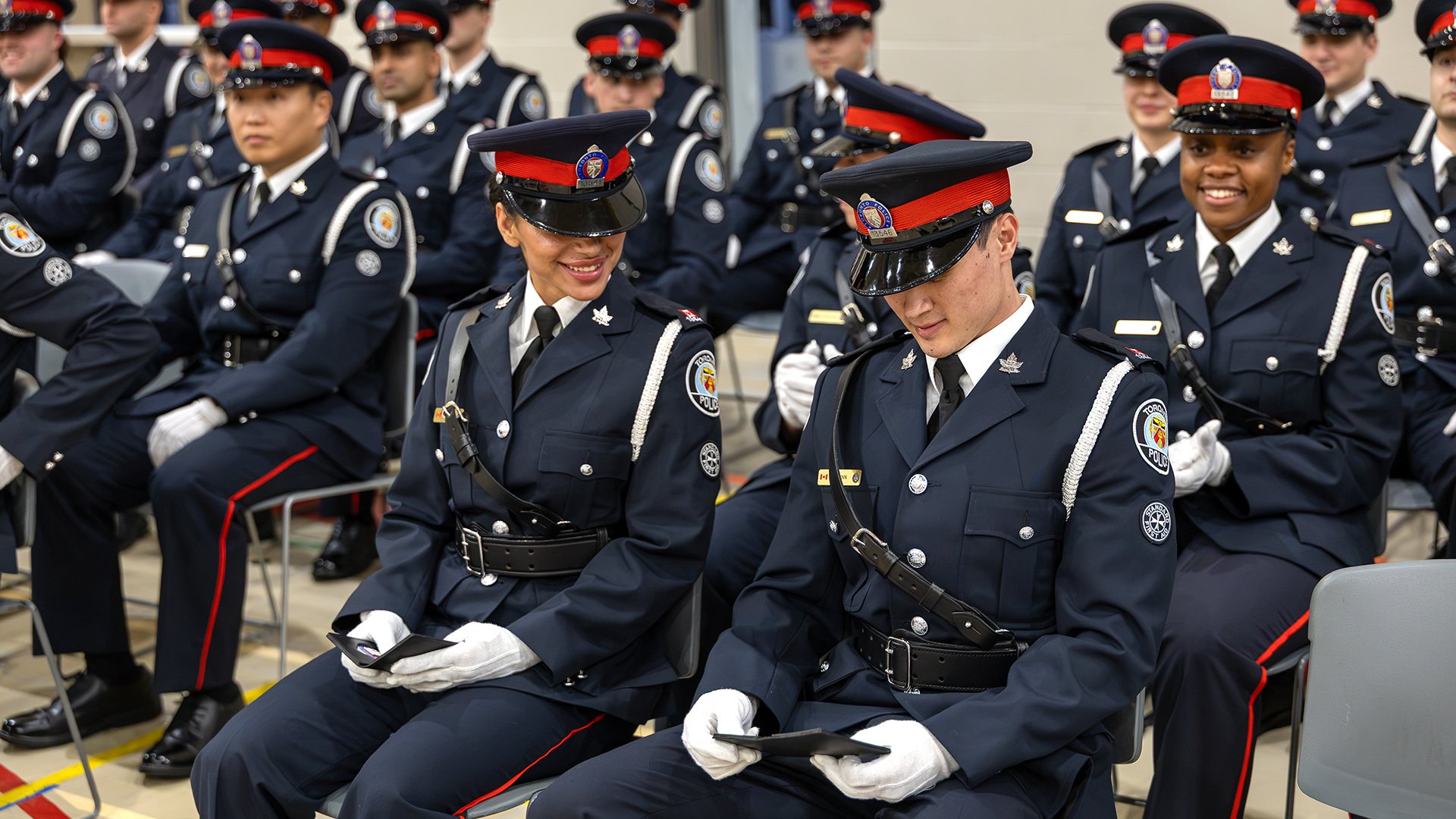
New Police Constables Step Into Community
Drawing on 36 years in policing, Chief Myron Demkiw urged Toronto’s newest police officers to listen first, keep learning and make time for their own well-being as they begin serving the city.
Addressing the 88 members of Recruit Class 26-03 at their November 23 graduation at the Toronto Police College, he told the new constables that every interaction, whether with a colleague or a resident in distress, gives them a chance to put the Service’s values into practice.
“What does it mean to give your best?” Demkiw asked. “It means knowing that every contact matters. It means that every time you interact with a colleague, every time you’re out there serving the public, you embody everything we stand for.”
One lesson he wished he had learned earlier in his career was to take the time to understand what someone was going through before asking them to see his point of view. That matters especially, he said, when people call the police because they need help.
“They want to be seen, heard, and understood on those days more than any other day,” Demkiw said. “So, take the time and seek to understand their situation and perspective, before you seek to be understood.”
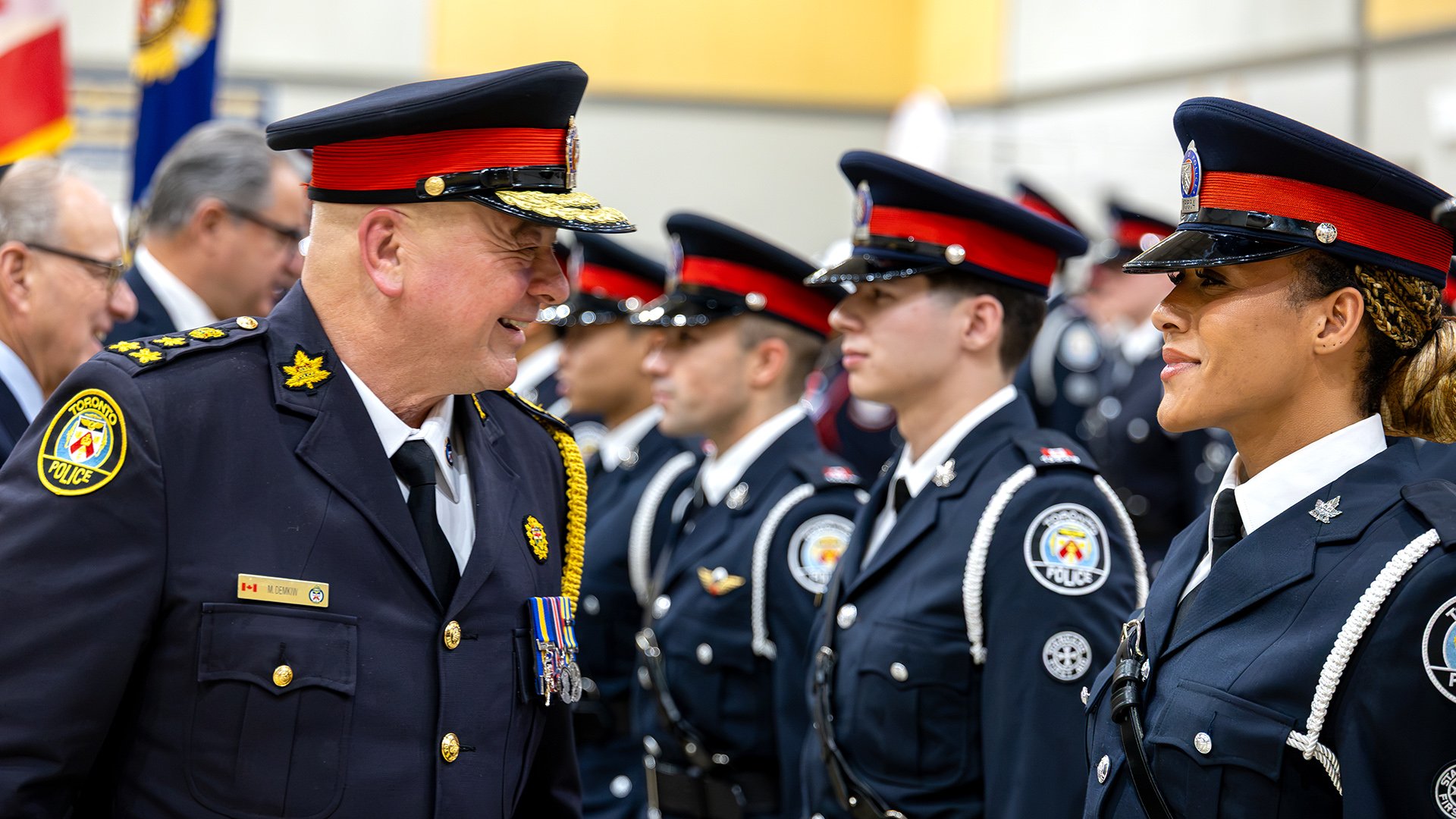
The Chief encouraged graduates to continue their education.
He said he would have returned to school sooner had he realized on his own graduation day how much of his career he still had ahead of him to put that learning to use. He also spoke about periods when he neglected his well-being and the effect that had at work and at home.
“Prioritizing self-care is a commitment to yourself, just as it is a commitment to your loved ones, many of whom are here this evening,” Demkiw added. “It is also a commitment to the communities we serve as it allows us to bring the best version of ourselves to our life of service each and every day.”
Toronto Police Service Board Chair Shelley Carroll said the class was part of the Board’s commitment to strengthen neighbourhood policing and give serving officers more support.
She said she and Mayor Olivia Chow had worked with the Chief to increase hiring, and she thanked families and loved ones for helping the recruits through the demands of training.
Carroll reminded the graduates that the authority they were taking on came with a duty to use it fairly. She said some people would turn to them for protection and others for reassurance and the way an officer responds in those moments can have lasting consequences.
“The public expects you to exercise that authority with fairness, good judgment, and most of all, respect,” Carroll said. “That trust is fundamental to policing, and it is something you will have to earn and maintain throughout your careers. Integrity means doing the right thing, even when it’s difficult. It means being accountable for your decisions, having the courage to speak up when something isn’t right.”
She also asked the constables to consider how they could help shape the Service as they gained experience.
“You can become leaders, you can become mentors and you will be role models,” Carroll said. “You can build careers that take you in directions you may never have imagined while you were sitting here tonight.”
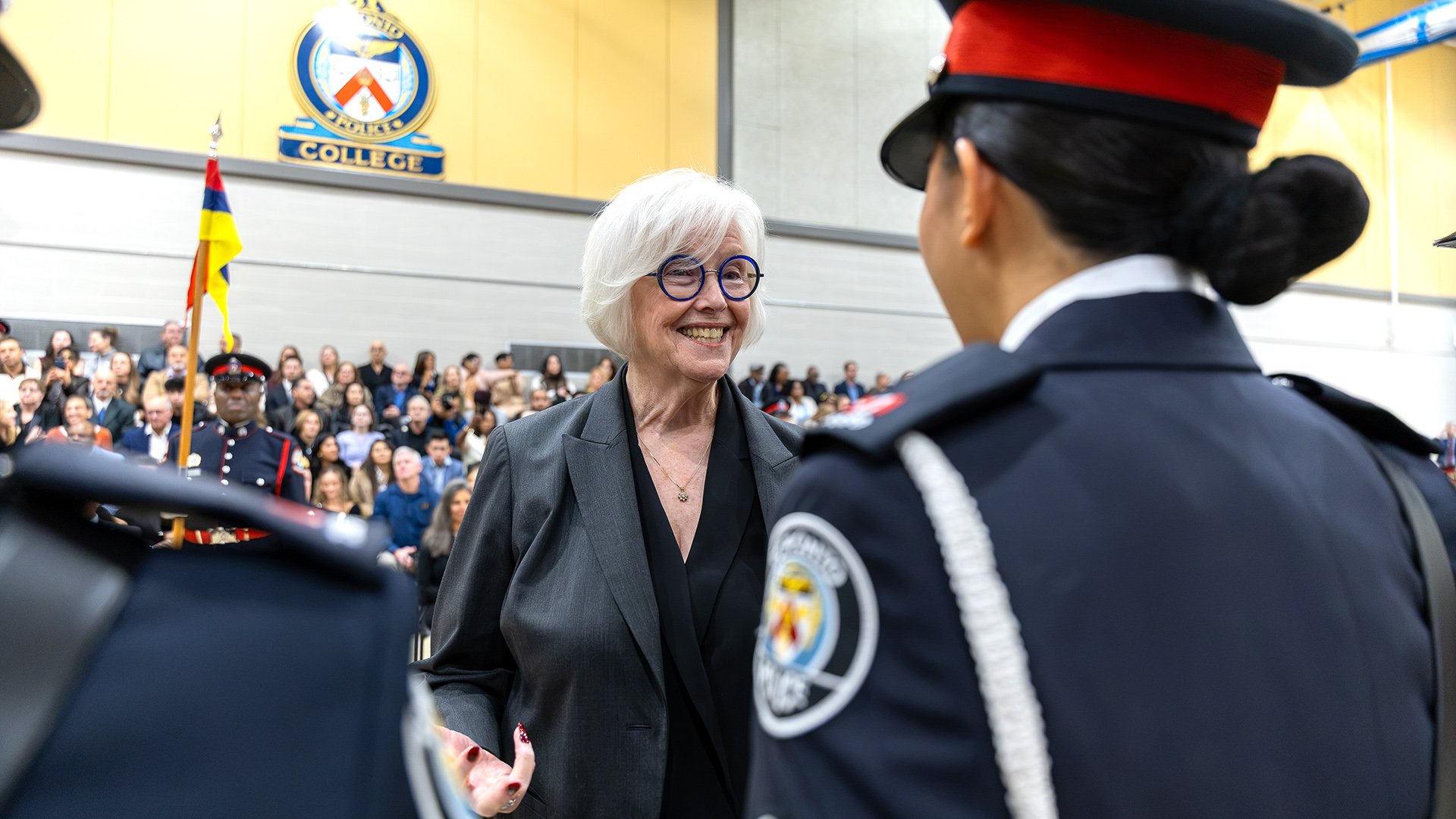
Chow told the graduates that safety comes up often when she speaks with Torontonians at festivals, in subway stations and at their doors. She encouraged the constables to get to know the people in the neighbourhoods where they would work, from shop owners and seniors to children playing basketball.
“Trust is built one call at a time, one conversation at a time,” she pointed out. “It is done by listening and by treating every person with dignity. Get to know the neighbourhoods you serve.”
Chow singled out the 10 women in the graduating class, saying that girls who see them in uniform will know that a career in policing is open to them. She asked the graduates to applaud their families, who had taken on extra responsibilities at home and encouraged them through months of training.
Ontario Solicitor General Michael Kerzner congratulated the class on behalf of Premier Doug Ford. He said he had met the recruits several times, including early in their training, when they spoke about wanting a career in which they could make a difference.
He encouraged them to draw on their own experiences as they serve people who speak different languages, practise different faiths and come from different backgrounds.
“We have to be prepared to step out of our comfort zone,” Kerzner said. “We have to be prepared to understand we can make a difference in a person’s life, sometimes without ever any expectation of being thanked or being appreciated for a job well done.”
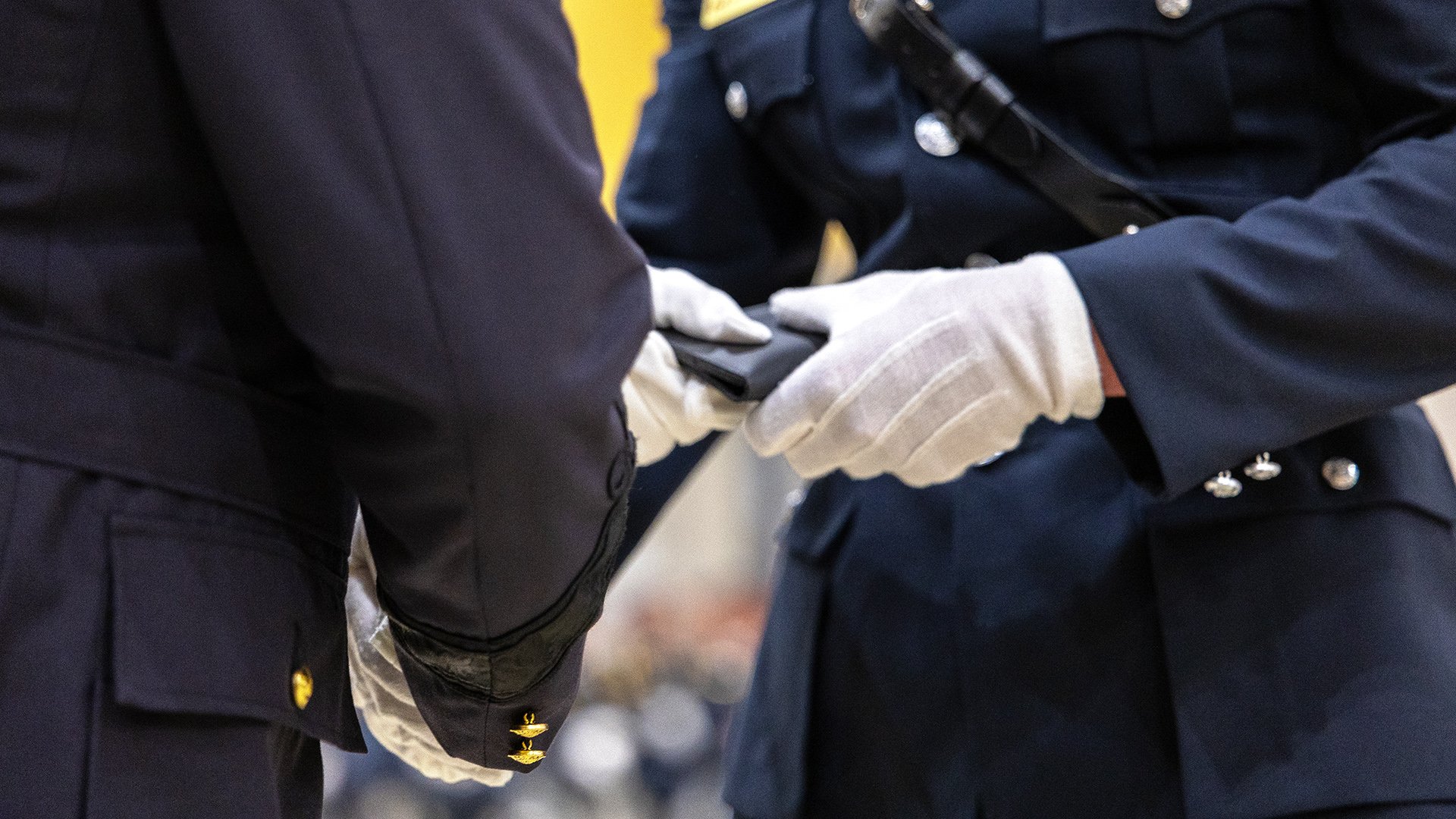
Constable Blaise Harrington had considered policing before she chose nursing. She specialized in pediatrics and later moved into emergency psychiatric care, where she worked with police officers, particularly in forensic psychiatric settings.
Seeing how they responded to people in crisis helped her picture how she could use the skills she had acquired as a registered nurse.
“I was very drawn to those officers that were coming in and very inspired by their work,” Harrington said. “And with my very strong skills in those realms, I knew that I could apply that in policing.”
She said she learned in nursing how to listen closely, explain what was happening and help calm people in distress. She expects to draw on those skills when she responds to calls. Recruit training gave her a chance to learn how to use them in a role with different responsibilities.
“It was very neat to be able to shift my mindset as a registered nurse more toward a policing mindset,” said Harrington, who was the recipient of the Drill, Dress & Deportment Award that bears the name of Toronto Police Military Veteran Jack Reid. “That was a learning curve, but it was a learning curve that I welcomed, and I’m very grateful to have gotten the opportunity to experience.”
The recruit grew up in Bowmanville and shared a profession with both of her sisters, including her identical twin. Some relatives and colleagues were surprised when she told them she was changing careers. By then, the idea had been with her for years.
“Every time I saw a police officer or a cruiser, I was like, ‘I should be in that car. I should be in that uniform’,” added Harrington. “I’ve always had an urge to step in and help. I’m never a bystander. So I just felt like this was exactly where I needed to be. It took me six years of nursing to get the courage to make the shift.”
Toronto Police was the only service she applied to. She said she felt connected to the city and wanted to serve its diverse communities.
Fellow graduate Tushar Dongre spent six years teaching people to ride motorcycles. Friends who had joined the Toronto Police Service encouraged him to apply. He said they had seen how readily he helped others and how calmly he made decisions. He was drawn to the prospect of working with people who would challenge him to improve and expected to do the same for them.
“I wanted to be with like-minded people and people that want to do better for themselves and also want to push each other,” Dongre said. “I wanted to be in that environment. And the first thing that came to my mind was policing.”
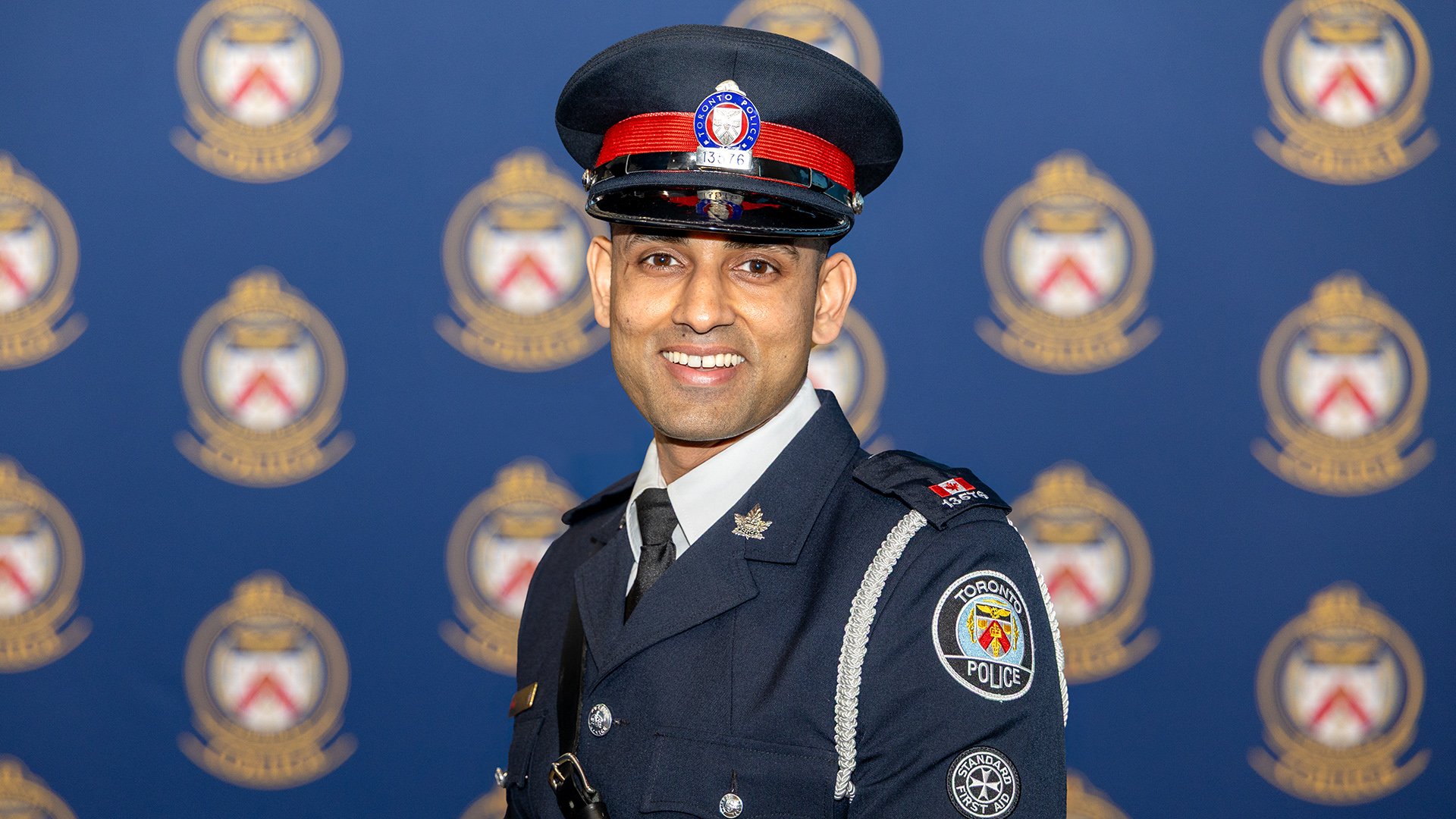
He said the discipline recruit training demanded was part of its appeal.
“I strive to be the best version of myself, and I think I knew what I was getting into,” Dongre said. “It’s going to be difficult. There will be discipline. There will be things that I need to change about myself, and I really wanted to do that.”
Dongre grew up in India and moved to Canada 14 years ago. His parents travelled from India to see him graduate, making only their second visit to Canada.
Nickolas Alberton earned the High Academic Achiever Award with a mark of 96 percent, while Hiva Askari received the Chief’s Wellbeing Award.
Alexander Krieger captured the High Performance in Fitness Award, Joseph Jean-Baptiste received the Most Improved Fitness Award, Gurpreet Singh earned the Gulshan Kassamali Diversity & Inclusion Memorial Award and Omatsuli Apoh was the recipient of the Harry Mayzel Leadership Award.
Speaking on behalf of graduates, valedictorian Stuart O’Hara recalled how strangers from different backgrounds grew close through months of training at Toronto Police College.
“There were plenty of burpees and laps around the parking lot, but some of the most lasting lessons came away from the college,” he noted. “We attended Constable Tarun Bali’s funeral and stood together in a downpour. We stood shoulder to shoulder, patch to patch, to honour a fallen officer. In that moment, we began to understand what it means to be a police officer.”
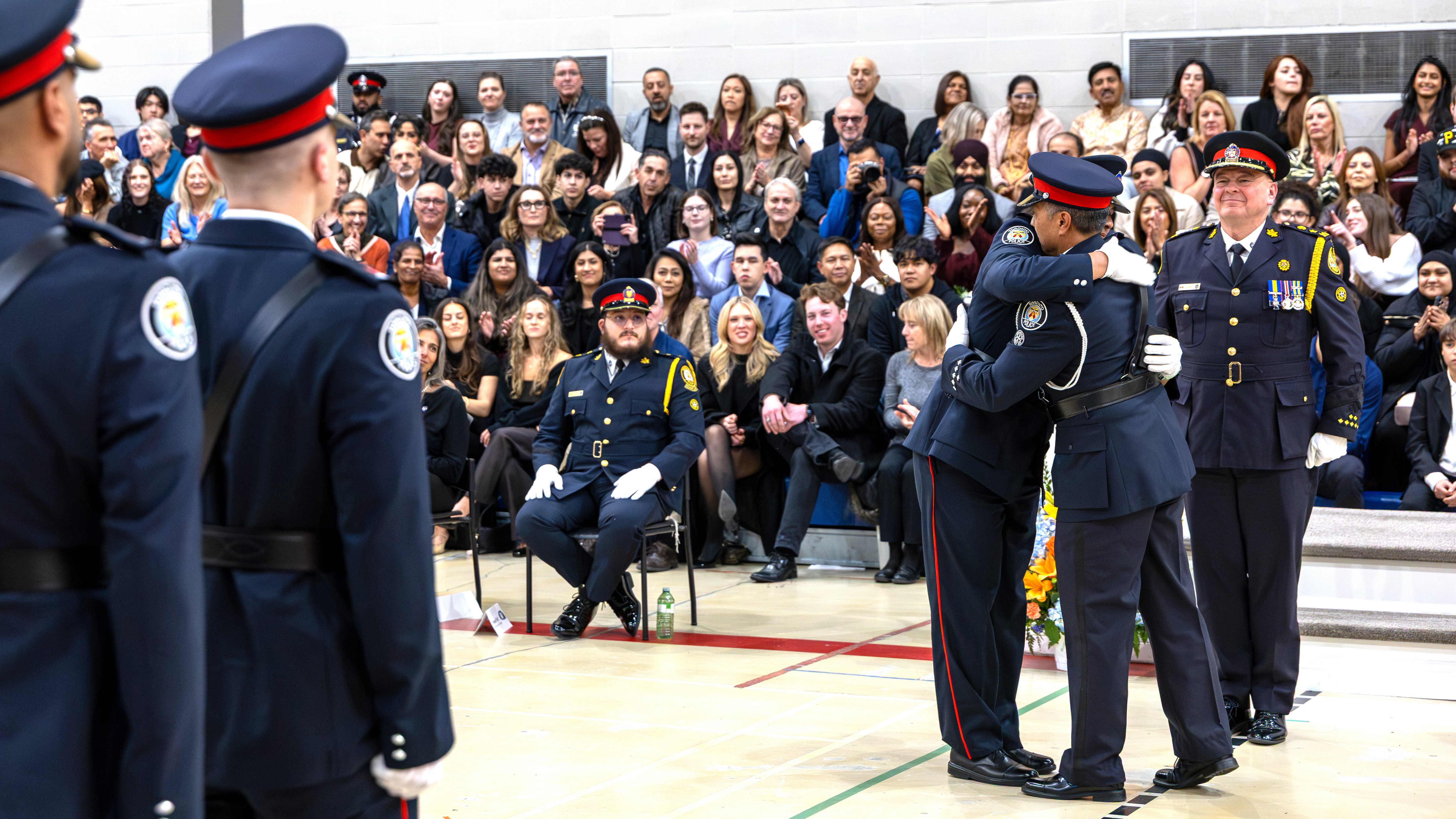
The class also attended Constable Marc Pinizzotto’s funeral the following week.
“His death reminded us that behind every uniform is a person with family and colleagues who care deeply about them,” noted O’Hara.
Looking ahead to their first shifts, he urged classmates to imagine how they would want an officer to treat their own family in a moment of fear or distress.
“Think about the kind of officer you would want to show up at your door,” he added. “Be that officer. Be yourself. Be the person who treats people with respect. We must always be willing to learn, take responsibility, and hold ourselves to the highest standards. The uniform gives us authority, but our actions earn trust. That trust is built call by call, conversation by conversation, and decision by decision.”
The recruits began their training in June with five weeks at the Toronto Police College, where instruction included the Criminal Code, the Highway Traffic Act and other provincial legislation. They also completed training in bias avoidance, Indigenous experiences, mental health and addiction, peer intervention and 2SLGBTQ+ communities before attending the Ontario Police College in Aylmer.
At Aylmer, they focused on academics, police vehicle operations, defensive tactics, firearms and physical training. They then returned to Toronto for 10 weeks of scenario-based exercises, report writing, vehicle stops and additional physical preparation.
The day after graduation, the new officers were scheduled to report to their divisions for station orientation before being paired with coach officers who will guide them through the next stage of their development.
Class 26-03 also marked the occasion through service.
Continuing a graduation tradition of supporting a community organization, the recruits collected toys for Canada Beyond the Blue which provides a community of support to police members and their families.