

New Communications Operators Ready to Answer the Call at Toronto Police
Deputy Chief Rob Johnson welcomed 25 graduating Communications Operators to the Toronto Police Service on November 4, emphasizing their essential role as the first voice people hear when they call 9-1-1 and a vital link to officers responding to emergencies.
“When anyone in this city calls 911 for help, the first voice they will hear is your voice,” Johnson said. “People rely on your professionalism, and so do our officers. You are the vital link to police officers in the field, and you help keep everyone safe.”
Speaking at the Toronto Police College, he said the graduates had earned their place through weeks of classroom instruction, daily quizzes, weekly examinations and hours of on-desk training.
Graduate Clint Cassells sees his new career as an opportunity to build on values he learned growing up in Toronto, where his father coached his East York baseball team.
“My dad was heavily involved in community service, and he instilled those values in me,” he said. “I think this is a great way to give back to the community.”
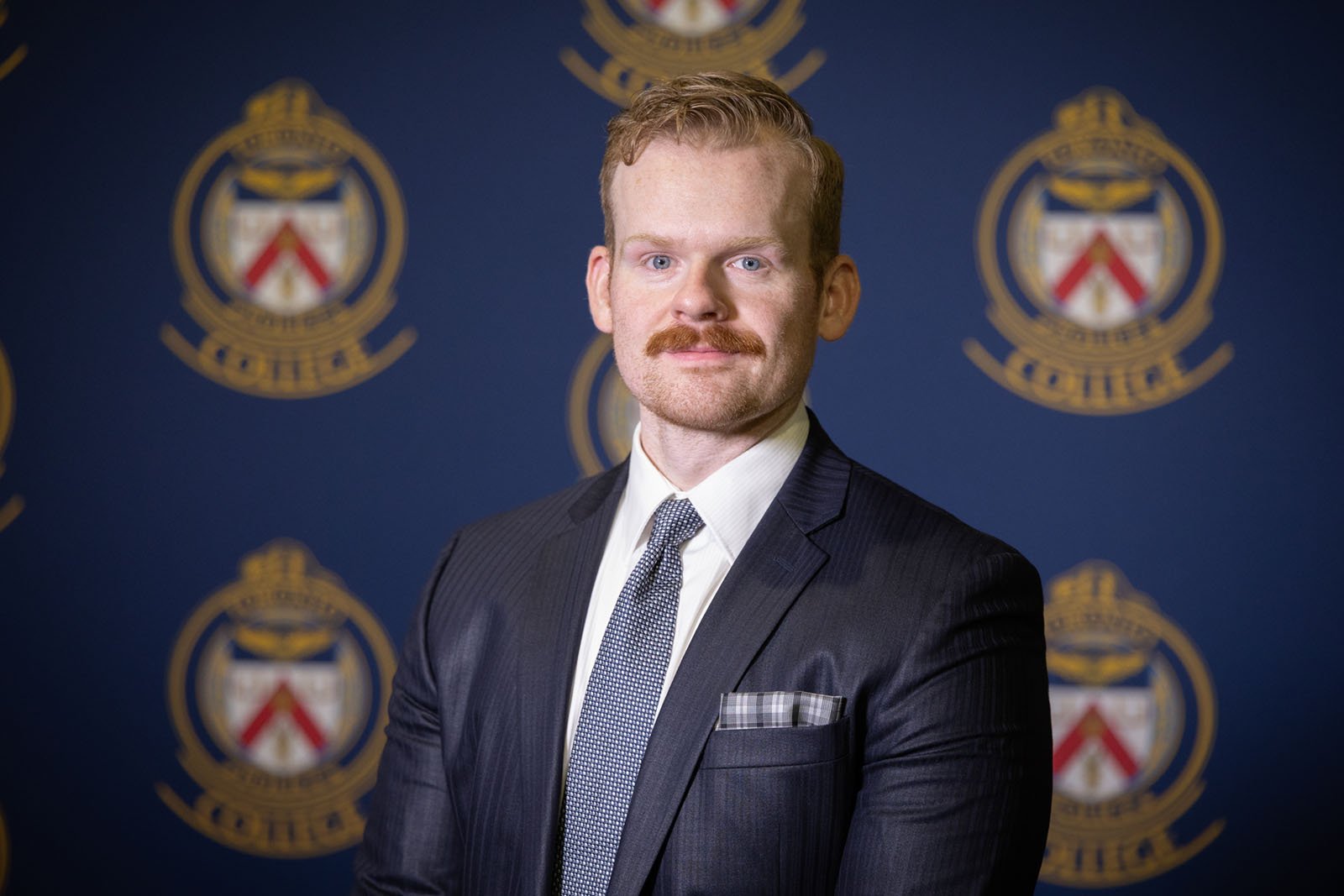
Cassells spent seven years bartending and operated a personal training business for nearly four years before considering a new direction.
His fiancée, who works in a civilian position at TPS headquarters, brought the Communications Operator posting to his attention.
“She introduced me to the position and showed me the job posting,” he said. “I hadn’t even considered it until she sent it to me. I enjoyed bartending and personal training, but I was looking for something long-term and a little more stable.”
The transition brought a demanding learning experience.
“The training was very intensive and stressful at times,” Cassells said. “Everything was very new and different from what I expected. It was completely different from what I had been doing before, but it was a good change of pace for me.”
His experience reflects the varied backgrounds of the graduating class, whose members bring experience from policing and other public service roles, the Canadian Armed Forces, finance, management and healthcare.
“It’s great to see recruits joining us from such a variety of backgrounds because you each bring unique experiences and perspectives,” he said. “You will apply those skills to this work, learn from one another, and come together as one team.”
Graduate Rebecca Mohabir brought seven years of experience as a court clerk monitor to her new career.
Interested in justice studies and the criminal justice system, she initially considered becoming a police officer. Her husband serves at 13 Division.
While exploring the TPS website, however, she discovered Communications Services and recognized an opportunity suited to her skills.
“When I read about the Communications Operator position, I felt it was more my style,” Mohabir said. “It reminded me of working in court, with the multitasking and the fast-paced environment. I thought, ‘That’s right up my alley,’ and that’s how I ended up applying.”
Communications Services answered 1.7 million calls in 2025, underscoring the demands facing the team the graduates are joining.
Their responsibilities include relaying crucial information about incidents and suspects, sending backup, helping establish perimeters and coordinating responses to locate missing people.
“The work you do for our communities and for our Service is essential,” Johnson said.
He also highlighted recent improvements within Communications Services.
“We have introduced new technologies, reduced call answer times, and continue to work toward improving response times,” he said. “All of this now becomes part of your work, and I know that both the Service and the people of Toronto can count on you.”
Toronto Police Service Board Chair Shelley Carroll said the graduates were entering careers requiring sound judgment, compassion and the ability to reassure people during some of their most difficult moments.
“Through your ability to listen, assess, and provide clear direction, you help turn fear and uncertainty into action,” she said. “Your professionalism and compassion can make a meaningful difference in someone’s most difficult moment. That is an extraordinary responsibility, and one that deserves our recognition.”
Carroll recognized the instructors, trainers, supervisors, mentors and Communications Services staff who prepared the graduates. She also thanked families and friends for supporting them throughout the demanding training program.
Communications Operators complete 30 weeks of training, comprising 14 weeks of call-taker training, 12 weeks of dispatch training and four weeks of remote monitoring.
Training takes place on days, afternoons, midnights and weekends, combining classroom instruction with on-the-job learning alongside experienced Communications Coach Operators.
Superintendent Greg Watts, the officer in charge of Communications Services, said graduation marks an achievement whose demands are not always fully understood.
“I am convinced it is the most difficult training program in our organization,” he said.
Operators must qualify in both call-taking and dispatch, two distinct roles that require them to move from helping an individual caller to coordinating officers across an entire division.
“When you’re on the dispatch side, you are in control of the entire geography of a division, which means you need to know where every officer is,” Watts said. “We need our dispatchers to see around those corners. And when things go bad, they’re the ones that help them. They’re the ones that get them help.”
During a foot pursuit, for example, dispatchers help organize a perimeter, send additional officers and coordinate specialized support while keeping track of the unfolding situation.
“Nothing happens in our Service without them having their hands on it,” noted Watts. “Whether it’s somebody calling 9-1-1, they’re the first point of contact. When an officer goes to that call, they’re managing all of it.”
He also credited Communications Services staff with embracing changes that have helped improve service to the public.
“We have introduced new technology to help our people,” added Watts. “But all of those ideas are just ideas if they don’t make it happen.”
The ceremony recognized graduates who distinguished themselves during training.
Lauren Cardosa received the Leadership Award, while Kadri Orkulu earned the Academic Achievement Award with a mark of 96.72 percent.
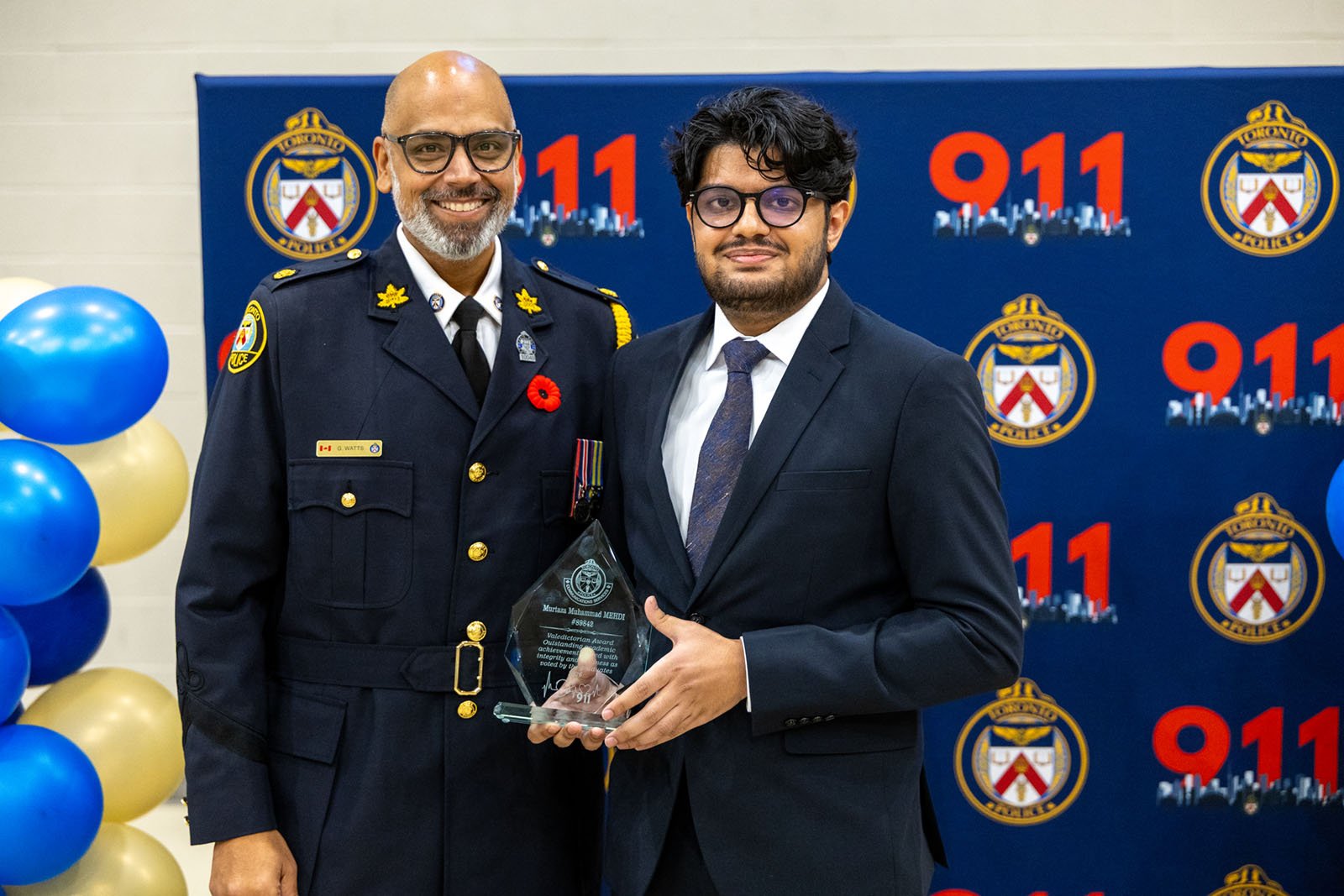
Valedictorian Murtaza Medhi also received the Elizabeth Murphy Humanitarian Award, named in memory of a Communications Services member who served for 21 years. Known for her positive attitude and kindness, Murphy died in November 2021.
As the graduates begin their careers, Carroll encouraged them to remember the lasting importance of their work, even when they never learn what happens after a call ends.
“You may never meet the person whose call you answer, and you may never know the full outcome of that moment,” she said. “But your voice, your judgment, and your compassion will matter. Never underestimate the difference you can make by being there when someone needs help.”